Table of Contents
ToggleBackyard tiny homes, also called accessory dwelling units or ADUs, have surged in popularity as homeowners look for ways to add living space without leaving their property. Whether it’s housing aging parents, creating a rental income stream, or setting up a home office that actually feels separate from the main house, these compact structures solve real problems. But building one isn’t as simple as plopping down a pre-fab shed and calling it done. Zoning laws, utility connections, and budget realities all come into play. This guide walks through what it takes to plan, permit, design, and build a backyard tiny home that’s legal, livable, and worth the investment.
Key Takeaways
- A backyard tiny home (ADU) is a permanent, self-contained structure ranging from 200–800 square feet that adds appraised property value while providing flexible income, multigenerational housing, or workspace solutions.
- Before building a backyard tiny home, verify local zoning laws, permit requirements, and HOA restrictions, as regulations vary widely and the permitting process typically takes 8–16 weeks.
- Budget $50,000–$150,000 for a backyard tiny home project, with costs heavily influenced by foundation type, prefab vs. custom construction, utility upgrades, and site-specific challenges like trenching and electrical panel upgrades.
- Design small spaces effectively using open floor plans, vertical storage solutions, strategic window placement, and multi-functional furniture to maximize livability in compact layouts.
- Hire licensed professionals for electrical and plumbing work since these systems must meet code standards and pass inspection, even if you handle other construction aspects yourself.
What Is a Backyard Tiny Home and Why Build One?
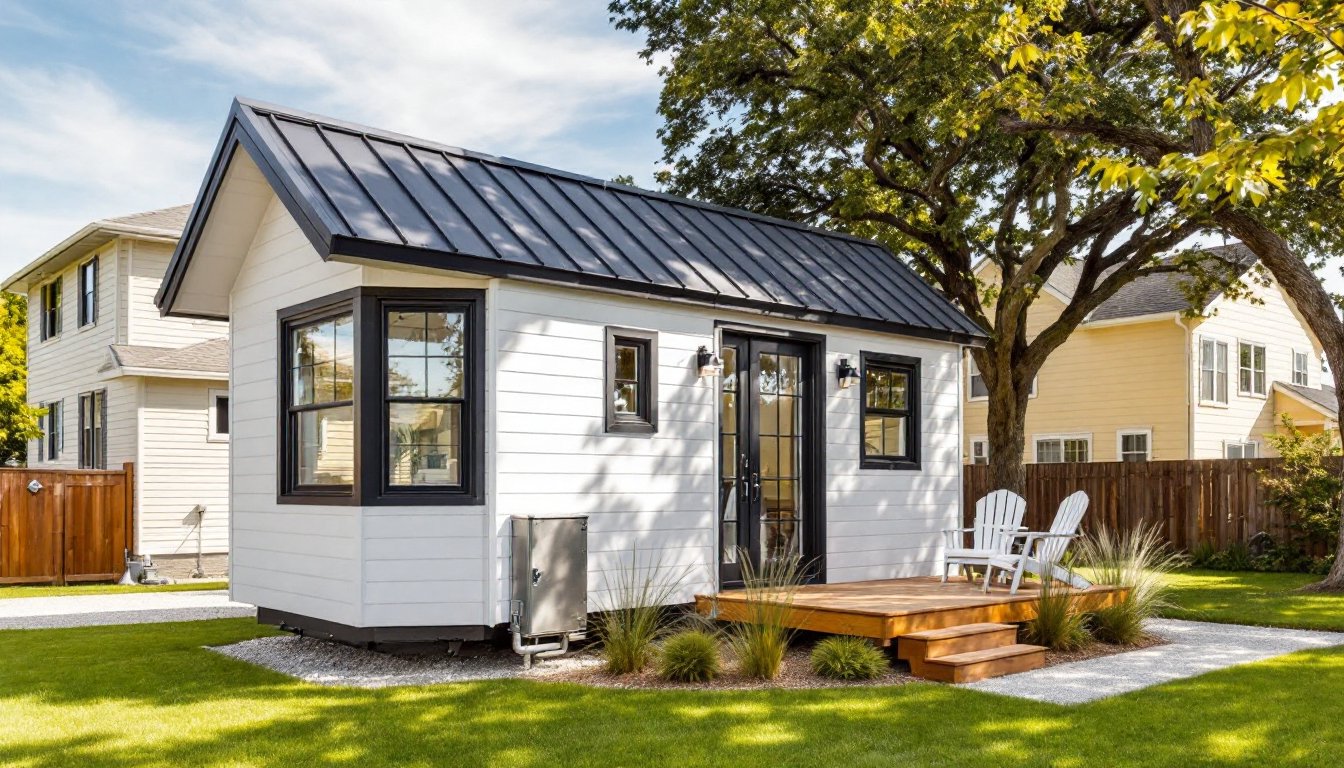
A backyard tiny home is a self-contained living structure built on the same lot as a primary residence. Unlike a guest house or she-shed, it typically includes a full bathroom, kitchenette, and sleeping area, everything needed for independent living. Sizes range from 200 to 800 square feet, though local codes often cap ADU dimensions.
Homeowners build them for several reasons. Multigenerational living has become more common, and an ADU offers privacy while keeping family close. Others use them as short-term rental units through platforms like Airbnb, generating income that can offset construction costs within a few years. Remote workers appreciate the physical separation from household distractions, and retirees sometimes build them as future downsizing options while renting out the main house.
Unlike RVs or mobile tiny homes, backyard ADUs are permanent structures anchored to a foundation. That means they’re subject to local building codes, require permits, and, when done right, add appraised value to the property. They’re not a loophole around regulations: they’re a legitimate addition to your lot.
Planning Your Backyard Tiny Home Project
Zoning Laws, Permits, and Legal Requirements
Before sketching floor plans or browsing prefab models, check local zoning ordinances. Many municipalities now allow ADUs, but rules vary wildly. Some cities require owner occupancy (either in the main house or the ADU), limit total lot coverage to a percentage, or mandate minimum setbacks from property lines, often 5 to 10 feet.
Permit requirements depend on whether the structure is considered an ADU, a guest house, or an accessory building. ADUs usually require full building permits, including inspections for foundation, framing, electrical, plumbing, and final occupancy. Expect the permitting process to take 8 to 16 weeks in most jurisdictions, longer in cities with backlogged building departments.
Some areas also require parking spaces for ADUs, fire sprinklers, or energy efficiency certifications. If your property is in a historic district or governed by an HOA, additional approvals may be needed. Skipping permits isn’t worth it, unpermitted structures can trigger fines, complicate future sales, and void homeowner’s insurance.
Budget Breakdown: What Does a Backyard Tiny Home Cost?
Costs range from $50,000 to $150,000 depending on size, finish level, and whether utilities already run to the build site. Here’s a rough breakdown:
- Foundation: $5,000–$12,000 for a concrete slab or pier-and-beam system
- Prefab kit or shell: $30,000–$80,000 (varies by manufacturer and included finishes)
- Site prep and utility hookups: $8,000–$20,000 (trenching, electrical panels, plumbing tie-ins)
- Interior finishes: $10,000–$25,000 (flooring, cabinetry, appliances, fixtures)
- Permits and fees: $2,000–$8,000 (depends on jurisdiction)
- Miscellaneous: $3,000–$10,000 (landscaping, access paths, contingency)
Custom builds typically cost more per square foot than prefab options but allow for site-specific design. DIYers can save 20–30% by handling finish work themselves, though structural and mechanical systems should involve licensed pros. Keep in mind that foundation work and utility trenching often exceed initial estimates, especially if you hit rock or need to upgrade your main electrical panel to 200 amps.
Design and Layout Ideas for Maximum Functionality
Small spaces demand smart design. Start with an open floor plan that combines kitchen, living, and sleeping areas without hard divisions. A studio layout works well for units under 400 square feet: larger builds can support a separate bedroom.
Vertical storage is critical. Install cabinets up to the ceiling, use wall-mounted folding tables, and consider a lofted sleeping area to free up floor space below. Murphy beds and convertible furniture reduce clutter but add cost, expect $1,500–$3,000 for quality wall beds.
Windows make tiny homes feel bigger. Aim for glazing on at least two walls to maximize natural light and cross-ventilation. Clerestory windows add privacy while still brightening interiors. Sliding barn doors save swing space compared to traditional hinged doors.
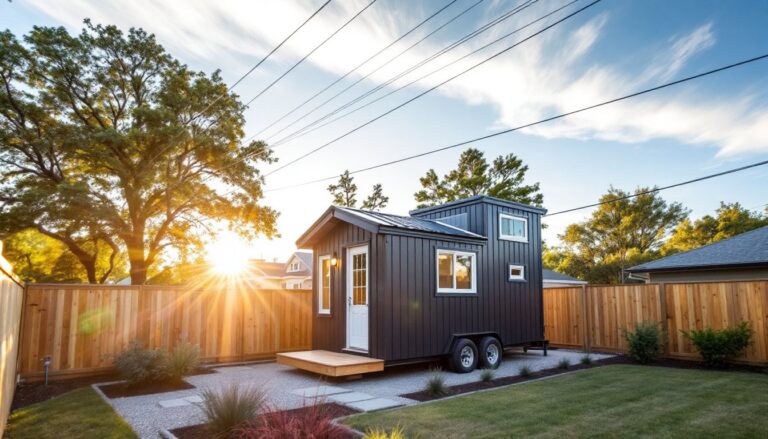
For exterior aesthetics, many ADUs echo the main house’s architecture, matching siding, rooflines, and trim. But modern tiny homes with metal roofing and board-and-batten siding have become popular alternatives, especially in urban infill lots where contemporary backyard entertaining spaces blend new and old structures.
Don’t overlook outdoor space. A small deck or covered porch extends usable square footage and provides a buffer between indoor and outdoor zones. Even a 6-by-8-foot deck makes a difference.
Building vs. Buying: Which Option Is Right for You?
Prefab ADUs offer speed and predictability. Companies building ADUs deliver modular units that arrive nearly finished, cutting on-site construction time to weeks instead of months. These units come with engineered plans pre-approved in many jurisdictions, streamlining permits.
The trade-off? Less customization. Prefab models come in set sizes and layouts. Adding custom features like vaulted ceilings or non-standard window placements often voids warranties or inflates costs.
Stick-built ADUs (constructed from scratch on-site) take longer, typically 4 to 8 months, but allow full control over design, materials, and finishes. They’re the better choice for odd-shaped lots, sloped terrain, or homeowners who want high-end details. Hiring a general contractor adds 15–20% to material costs but ensures coordination between trades and code compliance.
DIY builds save money but demand serious skills. Framing, roofing, and finish carpentry are manageable for experienced DIYers, but electrical and plumbing work usually require licensed professionals to pass inspection. Budget extra time, DIY projects often take twice as long as estimated.
Another option: ADU-specific contractors who specialize in small builds. They understand the permit process, have relationships with inspectors, and can often source materials more affordably than one-off builders.
Essential Systems: Utilities, Plumbing, and Electricity
Utility connections are where budgets often balloon. Most ADUs tie into the main house’s existing water, sewer, and electrical systems, but upgrades are common.
Electrical: ADUs typically need a dedicated sub-panel with a minimum 60-amp service, sometimes more if including electric heating or a hot tub. If your main panel is already maxed out, upgrading to 200 amps costs $2,000–$4,000. Trenching underground conduit from the main house to the ADU runs $8–$15 per linear foot. All electrical work must meet NEC (National Electrical Code) standards and pass inspection. Hire a licensed electrician, this isn’t a DIY job.
Plumbing: Running water and sewer lines requires trenching below the frost line (depth varies by climate, typically 18 to 48 inches). Use PEX for supply lines, it’s flexible, freeze-resistant, and easier to install than copper. Drain lines need proper slope: 1/4 inch per foot minimum. If the ADU sits lower than the main sewer line, you’ll need a sewage ejector pump, adding $1,500–$3,000. Some homeowners opt for composting toilets and greywater systems to avoid sewer hookups, though local codes may restrict this.
HVAC: Mini-split heat pumps are the go-to for ADUs. A single-zone 12,000 BTU unit handles most 400-square-foot spaces and costs $1,500–$3,000 installed. They’re energy-efficient, don’t require ductwork, and provide both heating and cooling. Avoid relying solely on space heaters or window AC units, they’re inefficient and won’t satisfy code in most climates.
Internet and Cable: Run CAT6 Ethernet cable during construction for hardwired internet. Wi-Fi extenders work but aren’t as reliable. Conduit buried alongside electrical lines simplifies future upgrades.
Safety systems matter too. Install hardwired smoke and CO detectors (required by code), and consider a monitored security system if the ADU will be rented. Many design inspiration resources like HGTV showcase ADU interiors but gloss over these unglamorous systems, don’t make that mistake.
Finally, check if your city requires separate utility meters for ADUs. Some municipalities mandate this for rental units, adding upfront cost but simplifying tenant billing. Water heaters are another decision point: tankless models save space but cost more upfront ($1,200–$2,500 installed), while traditional 30-gallon tanks run $600–$1,000.
Always work with licensed contractors for plumbing and electrical. Mistakes here cause expensive callbacks, failed inspections, and safety hazards. If you’re looking for current design trends that pair well with ADU projects, many homeowners integrate outdoor kitchens and fire pits to create a cohesive backyard experience.