Table of Contents
ToggleA small backyard doesn’t mean settling for less, it just demands smarter design choices. Homeowners with limited outdoor space can achieve stunning landscapes by prioritizing function, layering elements, and using every square foot intentionally. The key lies in understanding that scale, sight lines, and vertical opportunities matter far more than raw acreage. With the right combination of hardscaping, plant selection, and lighting, a compact yard can feel both spacious and inviting. This guide walks through practical strategies to maximize small yards, from vertical gardening systems to multi-functional features that serve double duty without sacrificing style.
Key Takeaways
- Small backyard landscape ideas maximize space through vertical gardening systems like trellises and wall-mounted planters that reclaim wasted wall and fence space while keeping ground areas open for seating and foot traffic.
- Strategic hardscaping with permeable pavers, gravel paths, and low seat walls creates defined zones and the illusion of separate rooms without making compact yards feel cramped.
- Choose multi-season plant performers like ‘Little Henry’ sweetspire and dwarf hydrangeas that provide year-round interest while staying under 5 feet tall and requiring minimal maintenance.
- Lighting techniques including low-voltage LED path lights, uplighting through tree canopies, and string lights can make small backyards feel larger after dark and extend outdoor living hours.
- Multi-functional features such as storage benches, raised planter beds that double as seating, and fold-down wall-mounted tables maximize utility by serving multiple purposes within a single footprint.
- Mirrors and reflective water features manipulate perception and expand the perceived space in small backyards by reflecting garden views and bouncing light into shadowed areas.
Maximize Space with Vertical Gardening Solutions
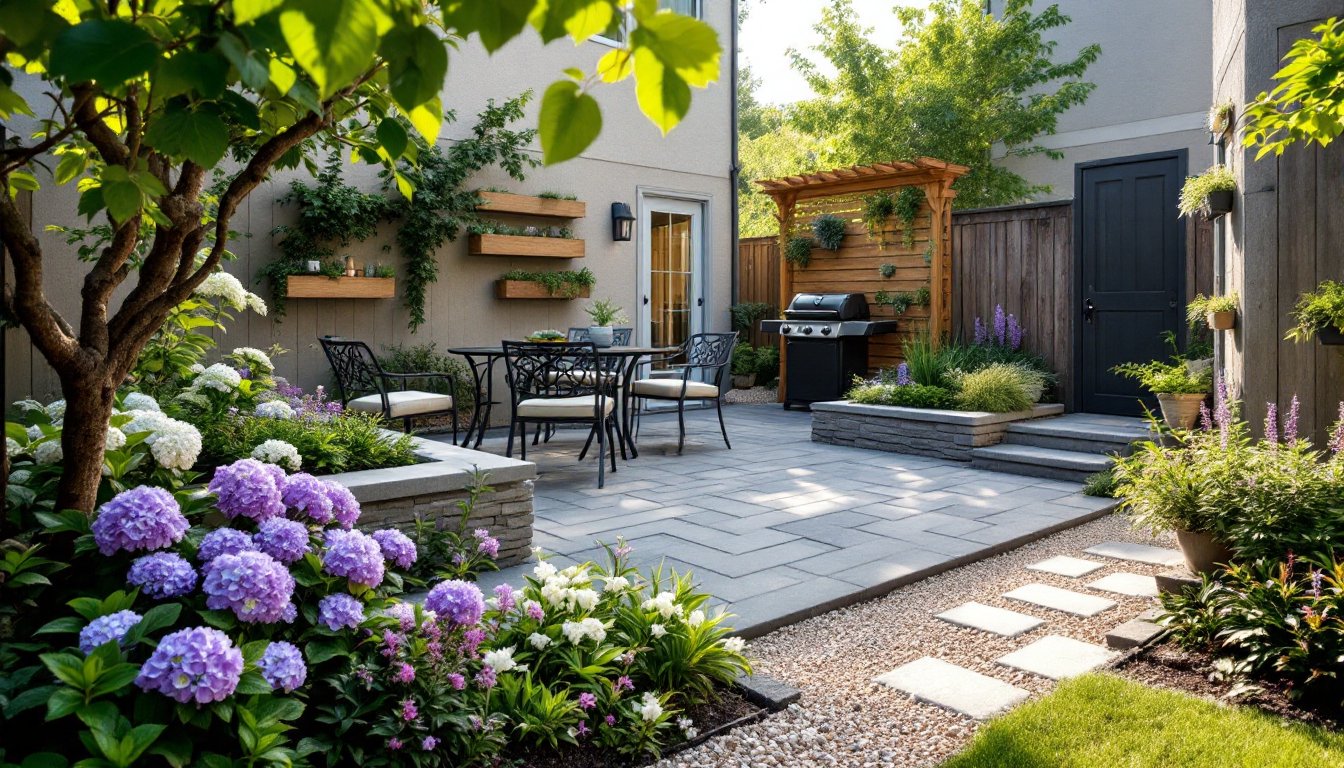
Vertical gardening reclaims wasted wall and fence space, turning flat surfaces into productive growing zones. Trellises, wall-mounted planters, and espalier systems add visual interest while keeping ground space open for foot traffic or seating.
Wall-mounted modular planters work well for herbs, succulents, and trailing plants like pothos or creeping jenny. Look for UV-resistant resin or powder-coated metal frames, both handle weather better than untreated wood. Mount them to studs or use appropriate masonry anchors rated for outdoor use. Most systems allow for drip irrigation integration, which keeps maintenance manageable.
Trellises support climbing edibles like pole beans, cucumbers, and sugar snap peas. A simple 6-foot cedar or metal trellis leans against a fence or attaches directly to siding (use spacers to allow airflow). For ornamental vines, consider clematis, climbing hydrangea, or honeysuckle, all provide seasonal color without overwhelming small beds.
Espalier techniques train fruit trees or shrubs to grow flat against walls or fences, saving 70–80% of the space a traditional tree requires. Apple, pear, and fig trees adapt well to this method. It takes patience, three to five years to establish the framework, but the result is both functional and sculptural. Wire supports spaced 12–18 inches apart guide branch growth horizontally.
Living walls or pocket planters suit homeowners interested in outdoor entertaining ideas that include edible garnishes or fresh herbs within arm’s reach of a grill or prep station. Keep weight considerations in mind: a 4×6-foot planted wall can exceed 100 pounds when saturated. Ensure backing walls or fence posts can handle the load.
Create Zones with Strategic Hardscaping
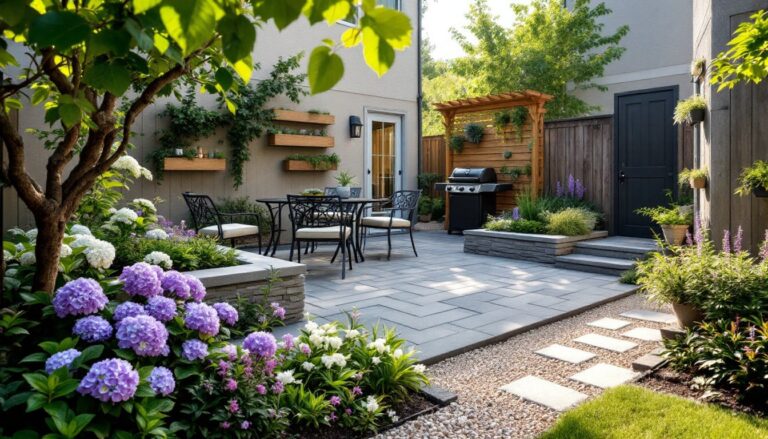
Hardscaping defines spaces without physical barriers, giving small yards the illusion of separate rooms. Pavers, gravel, and low curbing establish boundaries for dining, lounging, or planting beds, while maintaining sightlines that prevent a cramped feel.
A paver patio measuring 10×12 feet provides enough room for a four-person dining set and a small grill. Use permeable pavers where drainage is a concern, these allow water to filter through joints rather than pooling. Lay them over a 4-inch compacted gravel base topped with 1 inch of leveling sand. Polymeric sand in the joints locks pavers in place and resists weed growth better than standard mason sand.
Gravel paths work well for transitional zones between hardscape and planting beds. Use ¾-inch crushed stone for walkways, it compacts better than pea gravel and stays in place underfoot. Edge with steel or aluminum landscape edging (not plastic, which warps and shifts) to contain the material. A 3-foot-wide path allows comfortable single-file walking: 4 feet accommodates two people side by side.
Low seat walls double as planting bed borders and extra seating during gatherings. Build them 16–18 inches high using concrete retaining wall blocks or natural stone. Cap with flagstone or bluestone for a finished look. No mortar is required for walls under 2 feet, but ensure the first course sits on a level, compacted gravel base.
Consider incorporating design strategies that blend hardscape with softscape, groundcovers like creeping thyme or sedum planted between pavers soften edges and add fragrance. Avoid over-paving: aim for a 60/40 balance between hardscape and planted or lawn areas to prevent the yard from feeling like a parking lot.
Choose the Right Plants for Small Yards
Plant selection makes or breaks small-space landscaping. Oversized shrubs and aggressive spreaders quickly overwhelm compact yards, while well-chosen specimens provide year-round interest without constant pruning.
Prioritize multi-season performers, plants that offer flowers, fall color, or winter structure. Examples include ‘Little Henry’ sweetspire (fragrant summer blooms, red fall color), ‘Blue Muffin’ viburnum (spring flowers, blue berries, compact 5-foot spread), and dwarf fothergilla (white spring blooms, fiery autumn leaves). These stay under 5 feet and require minimal maintenance once established.
Avoid common space hogs: burning bush, forsythia, and red-twig dogwood all exceed 8 feet in width and demand frequent cutting back. Also skip fast-spreading groundcovers like vinca minor or English ivy, which escape beds and choke out desirable plants. Opt instead for controlled spreaders like ‘Dragon’s Blood’ sedum or creeping phlox.
Layering plants by height creates depth without crowding. Place dwarf conifers or upright grasses as focal points, mid-size perennials in the middle tier, and low groundcovers at the front. This arrangement mimics natural plant communities and ensures all specimens receive adequate light. Experts at Gardenista frequently showcase this layered approach in small-space garden profiles.
For edibles, choose compact or container-friendly varieties. Bush beans, determinate tomatoes (which stop at 3-4 feet), and compact zucchini like ‘Raven’ produce well in small beds or large pots. Blueberry cultivars such as ‘Top Hat’ stay under 2 feet and work in containers with acidic potting mix.
Container plantings extend the season and allow for flexibility. Use 16- to 20-inch-diameter pots for shrubs or small trees: anything smaller dries out too quickly in summer heat. Ensure pots have drainage holes, and elevate them slightly on pot feet to prevent water pooling underneath.
Compact Shrubs and Dwarf Varieties
Dwarf varieties deliver full-size plant appeal in a fraction of the space. ‘Nana’ hinoki cypress grows just 3 feet tall and wide, offering evergreen structure without blocking views. Dwarf Korean lilac (‘Palibin’) reaches 4-5 feet, produces fragrant purple blooms, and resists the mildew issues common to standard lilacs.
Boxwood alternatives like ‘Soft Touch’ holly or dwarf yaupon holly stay compact with less shearing. Both handle sun or part shade and tolerate a range of soil types. For deciduous color, ‘Little Devil’ ninebark brings dark purple foliage and stays under 4 feet, no pruning required.
Dwarf hydrangeas such as ‘Bobo’ (panicle type, 3 feet tall) or ‘Little Lime’ produce full-size blooms on manageable plants. These work in foundation beds or mixed borders, and their late-summer flowers provide interest when many perennials fade.
When selecting plants, confirm the mature size listed on the tag rather than its current nursery size. A 1-gallon shrub may look perfect at planting, but if it grows to 10 feet wide, it’ll overrun a small yard within three seasons. Check regional growing guides, Southern Living offers zone-specific plant recommendations that account for heat, humidity, and cold hardiness.
Add Depth with Lighting and Mirrors
Lighting and reflective surfaces manipulate perception, making small yards feel larger after dark and drawing the eye beyond physical boundaries. Strategic placement is everything, poor lighting creates harsh shadows or wasted bright spots, while thoughtful design extends usable hours and highlights key features.
Low-voltage LED landscape lighting (12V systems) offers safety, efficiency, and flexibility. Start with path lights spaced 8–10 feet apart along walkways, this provides adequate illumination without creating a runway effect. Use 3-watt LED fixtures: anything brighter overwhelms small spaces. Transformer size should match total wattage: for ten 3-watt fixtures, a 60-watt transformer handles the load with room for expansion.
Uplighting adds drama by casting light upward through tree canopies or onto vertical surfaces. Place fixtures 2–3 feet from the trunk, angled at 30–45 degrees. This technique works especially well with trees that have interesting bark texture or branching patterns, like Japanese maple or crape myrtle. Avoid uplighting dense evergreens, they absorb light rather than reflecting it, wasting the effect.
String lights soften outdoor spaces and work well for hosting gatherings in compact settings. Hang them 8–10 feet high using screw eyes or cup hooks fastened into fence posts or overhead beams. Choose Edison-style LED bulbs (2200–2700K color temperature) for warm, ambient light. Space bulbs 18–24 inches apart. Most strings run on standard 120V household current, but ensure outdoor-rated extension cords and GFIP-protected outlets for wet locations, required by NEC Article 210.8.
Mirrors expand perceived space by reflecting garden views and bouncing light into shaded corners. Use acrylic mirrors designed for outdoor use, they won’t shatter like glass and resist weathering better. Frame them to resemble windows or arbor openings, which tricks the eye into perceiving an extension of the garden. Mount securely to fence posts using corrosion-resistant hardware: a 2×3-foot mirror can catch significant wind load.
Reflective water features, small ponds, bubbling urns, or wall-mounted fountains, add light play and sound without occupying much ground space. A 3-foot-diameter preformed pond liner holds 40–50 gallons and supports a small recirculating pump. Surround it with moisture-loving plants like Japanese iris or cardinal flower to integrate it into the landscape. Homeowners pursuing effective outdoor hosting tips find that water features provide ambient sound that masks street noise during gatherings.
Incorporate Multi-Functional Outdoor Features
Multi-functional features maximize utility in small yards by serving two or more purposes within a single footprint. Built-in seating with storage, planter boxes that double as privacy screens, and fold-down tables keep square footage flexible.
Storage benches combine seating with weatherproof compartments for cushions, garden tools, or kids’ toys. Build one using pressure-treated 2x4s for the frame and ¾-inch exterior plywood for the seat and sides. Apply exterior-grade primer and two coats of acrylic latex paint or solid-color stain for durability. Hinge the lid for easy access and install soft-close hinges to prevent pinched fingers. A 4-foot-long bench provides seating for two adults and roughly 8 cubic feet of storage.
Raised planter beds with wide cap rails serve as casual seating around fire pits or conversation areas. Construct them from 6×6 timber or concrete blocks capped with 2×10 cedar or composite decking. The cap should overhang the bed by 1–2 inches on the seating side for comfort. Fill beds with 18–24 inches of soil, enough for deep-rooted vegetables or perennials. These planters also define zones without obstructing sightlines.
Fold-down or wall-mounted tables work well on patios or decks where space is at a premium. Many designs use piano hinges and folding brackets rated to hold 50–100 pounds. Mount them to wall studs or use ledger boards attached with lag screws. When not in use, the table folds flat against the wall, opening up the area for other activities. Pair this setup with folding chairs stored in a nearby bench or shed.
Pergolas with retractable canopies provide flexible shade and shelter, which extends outdoor living from early spring through late fall. A 10×10-foot pergola built from 6×6 posts and 2×8 rafters offers enough coverage for a dining set. Attach a retractable shade cloth using guide wires or a track system, these are available in UV-resistant fabrics that block 90–95% of sunlight. Homeowners interested in hosting events find that adjustable shade makes outdoor dining comfortable even during midday heat.
Fire pits with surrounding seat walls create a natural gathering spot that works year-round. Use a steel fire ring (36 inches diameter is standard) set into a gravel base at least 10 feet from structures and overhanging branches, check local fire codes for specific clearances. Build the seat wall from retaining wall blocks capped with flagstone, allowing 16–18 inches of height for comfortable seating. This setup consolidates seating, warmth, and focal point into one central feature. For design ideas that balance function and style, Sunset offers regional guides for outdoor living spaces.
Conclusion
Small backyards reward intentional design far more than they punish limited acreage. By layering vertical elements, defining zones with hardscape, selecting appropriately scaled plants, and incorporating multi-functional features, homeowners can build outdoor spaces that feel both generous and well-crafted. Lighting and reflective surfaces extend usability and perceived size, while smart storage and flexible furniture keep the space adaptable. Start with one or two high-impact changes, vertical planters or a defined patio zone, and build from there as budget and time allow.