Table of Contents
ToggleBackyard tiny homes, also called accessory dwelling units (ADUs), have evolved from housing trend to practical solution for multigenerational living, rental income, and home office space. But before ordering a prefab shell or pouring a foundation, homeowners need to navigate zoning codes, utility hookups, and budget realities. Building an ADU isn’t just a weekend carpentry project: it’s a permitted structure with real implications for property value, taxes, and long-term use. This guide walks through the planning, permitting, and construction steps to help homeowners decide whether a backyard tiny home makes sense, and how to build it right.
Key Takeaways
- A tiny home in backyard (ADU) requires navigating zoning codes, permits, and utility hookups before construction—a process that typically takes 3–6 months and costs $3,000–$8,000 in permits alone.
- Foundation, utility connections, and professional trades (electrical, plumbing, HVAC) are non-negotiable expenses; expect total costs of $75,000–$150,000 for a professionally built 500-square-foot ADU, though prefab options may range $50,000–$100,000.
- Building a compliant backyard tiny home unlocks multiple benefits—rental income, multigenerational housing, or flexible workspace—while increasing property value and avoiding costly retroactive permitting issues at resale.
- Zoning factors like lot size minimums, maximum ADU size caps, setbacks, and owner occupancy rules vary by jurisdiction, making early research and consultation with a local architect or expediter essential.
- Owner-builder approaches with subcontracted trades can save 15–25% over hiring a general contractor but require strong project management skills and 10–20 hours weekly for coordination and inspections.
- Unpermitted ADUs cannot be legally rented, are difficult to insure, and must be disclosed during home sales—making proper permitting a critical investment in the structure’s long-term viability and financial return.
What Is a Backyard Tiny Home and Why Build One?
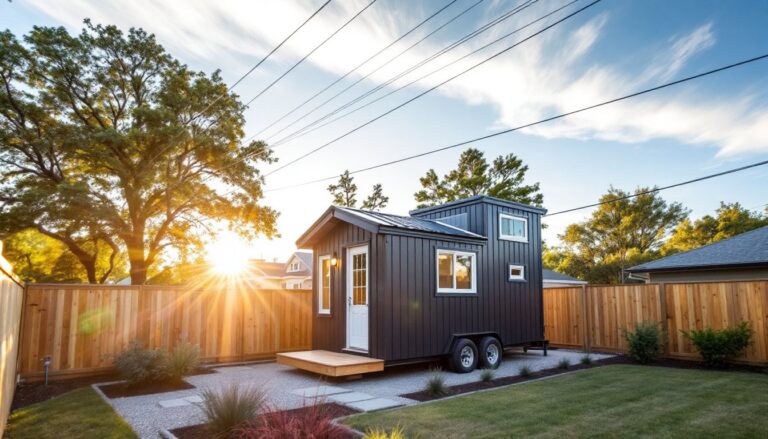
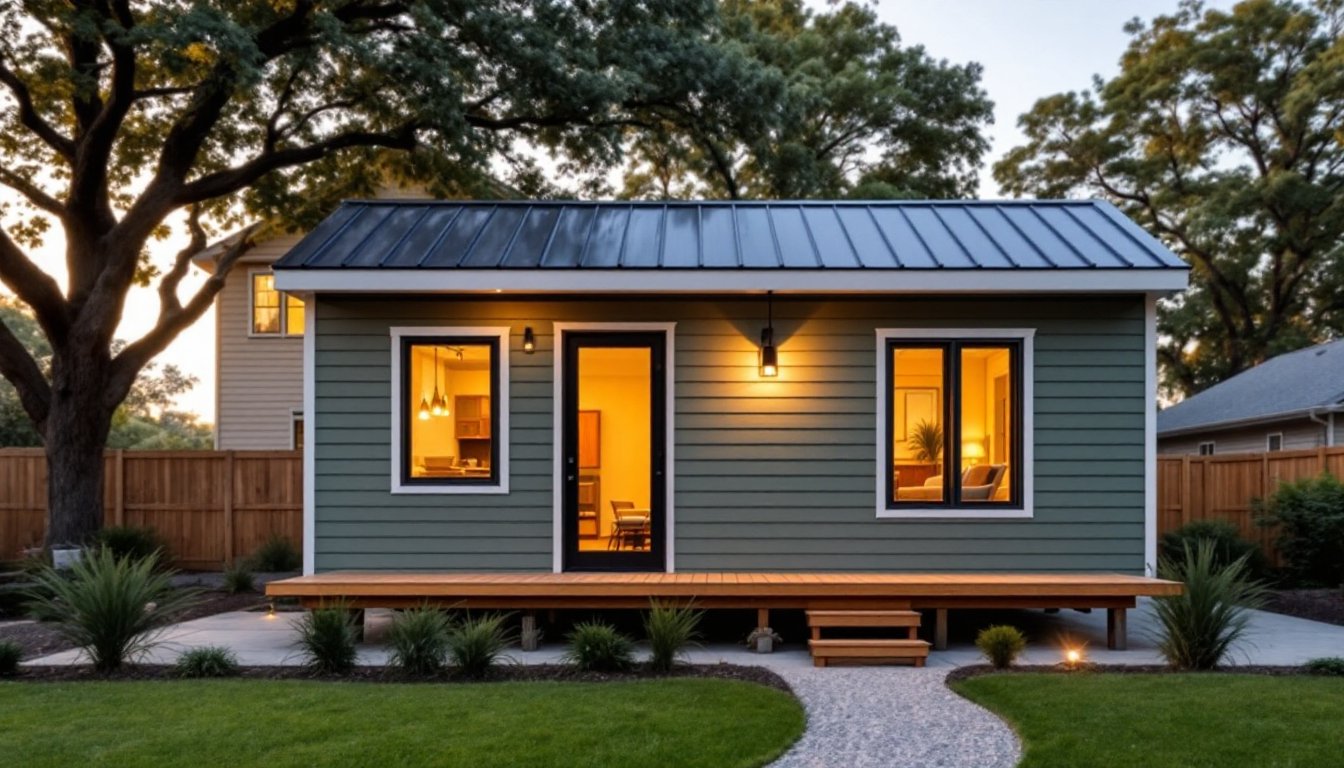
A backyard tiny home is a self-contained dwelling built on the same lot as a primary residence. These structures range from 100 to 800 square feet and include sleeping, cooking, and bathroom facilities, distinguishing them from simple sheds or studios.
Homeowners build ADUs for several reasons: aging parents who need proximity but independence, adult children returning home, or renters who help offset the mortgage. Some use them as dedicated home offices, art studios, or Airbnb units (where local laws allow short-term rentals).
Unlike RVs or mobile tiny homes on trailers, backyard ADUs are permanent structures anchored to foundations. That permanence brings both benefits (property value increase, long-term durability) and obligations (permits, taxes, and code compliance). They’re also distinct from prefab homes in construction flexibility, some ADUs arrive as modular kits, while others are stick-built from the ground up.
Zoning Laws and Permits You Need to Know
Zoning is the first hurdle, and the one that kills most ADU projects before ground is broken. Local ordinances dictate whether ADUs are allowed, how large they can be, setback distances from property lines, and whether they can be rented.
Key zoning factors to research:
- Lot size minimums: Many jurisdictions require a minimum lot size (often 5,000–7,000 square feet) before permitting an ADU.
- Maximum ADU size: Common caps range from 500 to 1,200 square feet, or a percentage of the primary dwelling’s square footage.
- Setbacks: Expect 3–5 feet from side and rear property lines: some cities allow zero setbacks for alley-facing ADUs.
- Parking requirements: Older codes may demand one off-street parking space per ADU: recent reforms in some states have waived this.
- Owner occupancy: Some areas require the property owner to live on-site (either in the main house or the ADU).
Permits typically include building, electrical, plumbing, and mechanical approvals. Expect the process to take 3–6 months in permit-friendly regions, longer in areas with more restrictive codes. Budget $3,000–$8,000 for permit and plan review fees alone.
If local zoning prohibits ADUs, homeowners can petition for a variance, but success isn’t guaranteed. Hiring a local architect or expediter familiar with ADU approvals often speeds the process and avoids costly plan revisions.
Planning Your Backyard Tiny Home: Size, Layout, and Design
Size and layout hinge on intended use and code limits. A 400-square-foot ADU works for a single occupant or couple: families or long-term renters typically need 600–800 square feet.
Common layout approaches:
- Studio: Open-plan living/sleeping area with separate bathroom and kitchenette. Efficient for guests or short-term use.
- One-bedroom: Dedicated bedroom plus living area. Adds privacy and rental appeal.
- Lofted sleeping area: Maximizes floor space in smaller footprints (under 300 square feet). Requires good ceiling height (minimum 7 feet under loft, per IRC).
Design considerations:
- Ceiling height: IRC requires habitable rooms to have at least 7-foot ceilings (measured from finished floor to finished ceiling). Vaulted or shed roofs add volume without increasing footprint.
- Natural light: Egress windows are required in bedrooms, minimum 5.7 square feet of openable area, with a sill height no more than 44 inches above the floor.
- Storage: Built-in benches, under-stair drawers, and wall-mounted shelving are essential in tight quarters.
- Exterior style: Match or complement the main house to preserve neighborhood aesthetics and resale value.
Many homeowners start with stock plans from ADU-focused architects, then customize. Custom design runs $2,000–$10,000: stock plans cost $500–$2,000. Either way, plans must be stamped by a licensed engineer or architect in most jurisdictions.
Foundation and Utility Considerations
Foundation choice depends on soil conditions, frost depth, and budget. Most backyard ADUs use one of three systems:
- Slab-on-grade: Concrete slab poured directly on compacted gravel. Best for flat lots and mild climates. Cost: $4–$8 per square foot.
- Pier and beam: Concrete piers support a wood-framed floor. Ideal for sloped lots or areas with expansive clay soils. Cost: $6–$12 per square foot.
- Crawl space: Perimeter stem walls with floor joists. Allows access to plumbing and utilities. Cost: $8–$15 per square foot.
Foundations must extend below the frost line (varies by region, check local building codes). In seismic zones, anchor bolts and hold-downs are required to tie framing to the foundation.
Utility hookups:
Connecting to existing water, sewer, and electrical systems is often more complex than the structure itself.
- Water and sewer: Tap into the main house’s lines or run new laterals to the street. Older systems may require a service upgrade to handle the additional load. Budget $3,000–$10,000 for trenching, pipe, and connections.
- Electrical: ADUs typically need a separate sub-panel fed from the main house. Expect a 60–100 amp service for a fully equipped unit. Licensed electrician required: cost: $2,000–$5,000. All wiring must comply with NEC standards.
- HVAC: Mini-split heat pumps are popular for ADUs, efficient, no ductwork required, and both heat and cool. Units sized for 400–800 square feet run $2,500–$5,000 installed.
- Gas (if applicable): If adding a gas range or tankless water heater, a licensed plumber must run a new line and size it correctly.
Safety note: Always call 811 before digging to locate underground utilities. Hitting a gas or electrical line can be fatal and expensive.
Cost Breakdown: Budgeting for Your Backyard ADU
ADU costs vary widely based on size, finishes, and labor rates. National averages in 2026 range from $150–$400 per square foot, all-in.
Typical cost breakdown for a 500-square-foot ADU:
- Foundation: $3,000–$6,000
- Framing and shell: $20,000–$35,000 (lumber, sheathing, windows, doors, roofing)
- Utilities (electrical, plumbing, HVAC): $10,000–$20,000
- Insulation and drywall: $5,000–$8,000
- Interior finishes (flooring, cabinets, fixtures): $8,000–$15,000
- Permits and design: $5,000–$12,000
- Contingency (10–15%): $5,000–$10,000
Total estimated cost: $75,000–$150,000 for a mid-grade, professionally built ADU.
Prefab or modular ADUs can lower costs to $50,000–$100,000 for the shell, but site work, foundation, and utility connections still apply. These units often arrive with electrical and plumbing rough-ins, saving labor but requiring skilled coordination during installation.
Financing options include home equity loans, HELOCs, cash-out refinances, or specialized ADU construction loans. Some municipalities offer ADU grant programs or permit fee waivers to encourage affordable housing stock, check with your local planning department.
Many small space design ideas emphasize maximizing function per dollar, open shelving instead of custom cabinetry, luxury vinyl plank instead of hardwood, and compact appliances all trim costs without sacrificing livability.
DIY vs. Professional Installation: What’s Right for You?
Building an ADU requires skills across framing, electrical, plumbing, and finish carpentry. Homeowners with strong carpentry experience can tackle much of the work themselves, but permits still require licensed electricians and plumbers for final inspections.
What DIYers can reasonably handle:
- Demolition and site prep
- Foundation formwork (if comfortable with concrete)
- Framing walls, floors, and roof (if experienced with structural carpentry)
- Insulation and drywall
- Interior trim, custom cabinetry builds, and finish painting
- Flooring installation
What requires licensed professionals:
- Electrical service upgrades and panel installations (NEC compliance, inspection required)
- Gas line installation
- Final plumbing connections and pressure testing
- HVAC installation (refrigerant handling requires EPA certification)
- Structural engineering sign-off for unusual spans or seismic retrofits
Hybrid approach:
Many homeowners act as owner-builders, pulling their own permits and subcontracting trades as needed. This saves 15–25% over hiring a general contractor but requires project management skills and time availability. Expect to spend 10–20 hours per week coordinating subs, ordering materials, and managing inspections.
Prefab or kit ADUs reduce on-site labor but still demand a skilled crew for delivery, crane placement (if needed), and utility hookups. Installation typically takes 1–3 days for the shell, then 4–8 weeks for interior finish work.
Realistic time estimates:
- Full DIY build: 6–12 months (working weekends)
- Owner-builder with subs: 3–6 months
- General contractor: 4–8 months (depending on permit delays)
- Prefab installation and finish: 2–4 months
Don’t skip permits to save time or money. Unpermitted ADUs are difficult to insure, can’t legally be rented in most areas, and must be disclosed during a home sale, often resulting in costly retroactive permitting or removal.
Conclusion
Backyard tiny homes deliver real value when planned correctly, extra income, housing for family, or flexible work space. But success hinges on understanding local codes, budgeting for the full project (not just the structure), and honestly assessing skill level versus professional help. Start with zoning research, secure permits early, and build to code. The result is a permitted, insurable, and valuable addition to the property, not a liability hiding in the backyard.