Table of Contents
ToggleA small backyard doesn’t mean limited potential. With the right design approach, even a compact outdoor space can deliver big impact, whether that’s a dining area, garden retreat, play zone, or entertaining spot. The key isn’t square footage: it’s smart use of every inch. Instead of viewing a smaller yard as a constraint, treat it as an opportunity to layer function, personality, and greenery without the overwhelm of a sprawling landscape. This guide walks through practical design strategies that maximize space, boost functionality, and make any small backyard feel intentional and inviting.
Key Takeaways
- Small backyard design ideas thrive when you prioritize vertical gardening and wall features to maximize growing and display space without consuming ground square footage.
- Create intentional zones with low borders, rugs, and overlapping functions to make your small backyard feel organized and purposeful rather than cluttered.
- Select appropriately scaled furniture with storage, modular designs, and multipurpose features to keep a compact outdoor space functional and uncluttered.
- Layer strategic lighting, mirrors, and reflective surfaces to visually expand your small backyard and enhance its usability after dark.
- Choose dwarf or columnar plants and native species that thrive in containers to add lush greenery while maintaining control over growth and scale.
- Use quality hardscaping like permeable pavers, focal points (fire features or water elements), and bold paint choices to anchor your design and add personality without overwhelming the space.
Maximize Space with Vertical Gardening and Wall Features
When ground space is tight, the best real estate is often on the walls and fences. Vertical gardening turns unused vertical surfaces into productive growing areas, storage, or visual interest without eating into walkable square footage.
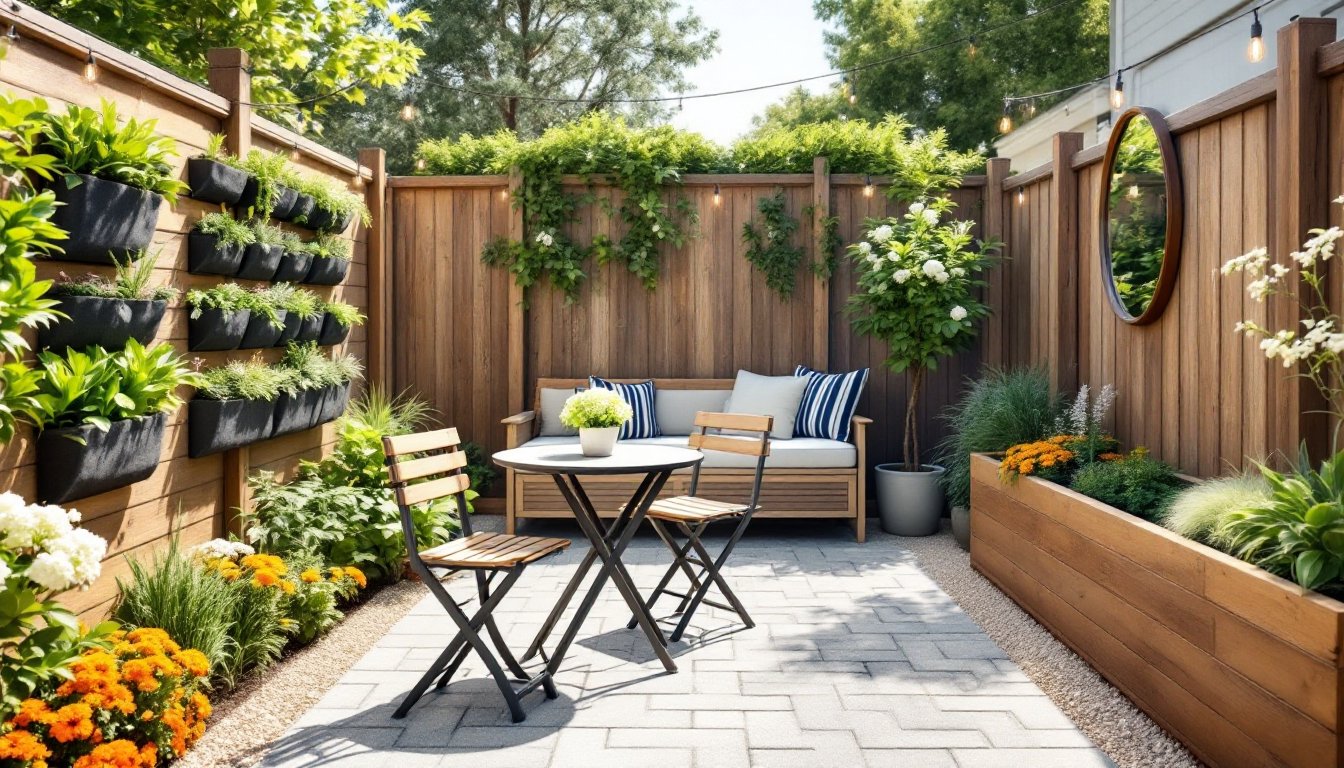
Wall-mounted planters, pocket planters, and modular grid systems let homeowners grow herbs, succulents, or trailing vines in stacked layers. Metal or cedar trellises support climbing plants like jasmine, clematis, or pole beans. Install these on fence faces, garage walls, or the back of the house using galvanized lag screws or wall anchors rated for outdoor use (check your surface material first, masonry needs different hardware than wood siding).
For a more permanent structure, consider a living wall system with built-in irrigation. These typically run a drip line behind modular felt or plastic pockets, fed by a timer and small pump. They’re popular in urban settings where horizontal planting beds aren’t an option.
Hanging planters suspended from pergola beams, tree branches, or wall brackets add greenery at eye level and above, drawing the gaze upward and making the space feel taller. Use S-hooks and adjustable ropes for flexibility, and rotate plants seasonally to keep things fresh.
If privacy is a concern, vertical slat fencing or a cedar screen wall does double duty as a mount for trailing plants or string lights. Aim for fence heights that meet local codes (often 6 feet max without a permit in residential zones, but verify with your municipality).
Create Zones for Multiple Functions
Small backyards benefit from intentional zoning, dividing the space into distinct areas that each serve a purpose. This keeps the yard from feeling cluttered or single-use.
Start by sketching a rough plan. Identify where sunlight hits at different times of day, where foot traffic naturally flows, and any existing features (a tree, shed, or slope). Then assign zones: dining, lounging, gardening, play, or cooking.
Use low borders to mark transitions without blocking sightlines. A row of pavers, a strip of gravel, a change in ground cover (mulch to turf), or a low planter box all signal “this area is different” without adding walls. Outdoor rugs also define zones, look for polypropylene or recycled plastic styles that resist mold and UV fade.
For example, place a bistro set on a small paver pad near the back door for morning coffee, then create a hosting outdoor gatherings lounge area farther out with a bench and fire pit. A narrow strip along the fence can become a raised bed or herb garden. Each zone stays compact but purposeful.
If the yard is especially tight, consider overlapping zones. A dining table can double as a workspace: a storage bench opens to reveal garden tools but serves as seating during a cookout. The key is flexibility and clear transitions, even if those transitions are just a couple feet wide.
Choose Smart Furniture and Storage Solutions
Furniture selection makes or breaks a small backyard. Oversized pieces crowd the space: the right scale opens it up.
Opt for folding, stackable, or nesting furniture that can be tucked away when not in use. Bistro sets, director’s chairs, and sling-style seating take up minimal footprint and store flat. Benches with lift-top storage hide cushions, tools, or toys while providing seating. Look for models with weather-resistant hinges and gas struts for smooth lid operation.
Multipurpose pieces are worth the investment. A low deck box doubles as a coffee table and storage. A potting bench with shelves becomes a bar cart during entertaining strategies. Many outdoor furniture lines now offer modular sectionals in small-scale widths (30–36 inches deep instead of the standard 40+).
Material matters. Powder-coated aluminum resists rust and stays lightweight. Teak and acacia hold up to weather but need occasional oiling. Avoid particleboard or untreated pine unless it’s under a covered porch.
For storage beyond furniture, use the vertical strategies mentioned earlier: wall-mounted tool racks, pegboards in a shed or under an eave, and overhead hooks in a garage or covered area. Keeping gear off the ground frees up usable space and reduces clutter.
If you’re building custom seating or planters, stick to pressure-treated lumber rated for ground contact (look for a 0.40 or higher retention level stamp) or naturally rot-resistant species like cedar or redwood. Seal cut ends with a wood preservative to extend lifespan.
Use Lighting and Mirrors to Expand Visual Space
Strategic lighting and reflective surfaces can make a small yard feel significantly larger, especially after dark.
Start with layered lighting: overhead string lights or a pergola-mounted fixture for ambient glow, path lights for safety and guidance, and accent lights (spotlights or well lights) to highlight trees, walls, or architectural features. Low-voltage LED systems (typically 12V) are DIY-friendly and energy-efficient. Run 14- or 12-gauge landscape wire from a transformer (mounted near an outdoor GEPT outlet) to fixtures spaced along paths or beds. Bury wire 6–8 inches deep or run it along fence lines in conduit.
Solar path lights are even simpler, no wiring, but check the lumen output. Cheaper models barely put out 5–10 lumens: look for 20+ lumens per fixture for functional illumination. Position solar panels where they’ll get at least 6 hours of direct sun.
String lights (Edison bulbs or cafe-style) soften the space and draw the eye horizontally, which can make narrow yards feel wider. Use guide wires (galvanized steel cable, 1/8-inch diameter) strung between posts or eye hooks to support the weight and keep lines taut.
Mirrors are a classic trick borrowed from interior design. An outdoor-rated mirror (look for sealed edges and rust-proof backing) mounted on a fence or garden wall reflects greenery and light, creating the illusion of depth. Angle it to catch plantings or sky, not direct sun (which can create glare or even a fire hazard if focused). Secure with galvanized or stainless hardware, outdoor moisture will rust standard screws fast.
Reflective surfaces like polished metal planters, water features, or even a strategically placed gazing ball add similar effects on a smaller scale.
Select Plants and Greenery That Fit Your Scale
Plant selection in a small yard requires editing. The goal is lushness without overgrowth, color without chaos.
Dwarf and compact cultivars are your friends. Instead of a standard-sized shrub that’ll hit 8 feet, choose a dwarf variety that tops out at 3–4 feet. Examples: dwarf Alberta spruce instead of full-sized evergreens, Little Lime hydrangea instead of standard paniculata, or patio-sized fruit trees (often grafted onto dwarfing rootstock).
Vertical growers, columnar evergreens, bamboo (clumping, not running), or espaliered fruit trees trained flat against a fence, add height without width. Espalier takes patience and annual pruning, but it’s one of the most space-efficient ways to grow apples, pears, or figs.
Container gardening offers flexibility. Large pots (15-gallon+) support small trees, shrubs, or perennial clusters and can be moved seasonally. Use a quality potting mix (not garden soil), and make sure pots have drainage holes. In cold climates, choose frost-resistant materials like fiberglass, high-fired ceramic, or resin, terra cotta cracks.
Native plants typically require less water and maintenance, and many have compact growth habits suited to smaller gardens. Check with your local extension office or native plant society for regional recommendations.
Avoid aggressive spreaders unless you’re prepared to contain them. Mint, bamboo (running types), and certain groundcovers can take over a small yard fast. If you want them, plant in sunken pots or use root barrier fabric (HDPE, at least 30 mils thick, buried 18–24 inches).
Layer plants by height, tallest in back or center, mid-size next, groundcovers or annuals in front, to create depth. Repetition (the same plant used in multiples) ties the design together and avoids the “one of everything” look that can feel chaotic in tight quarters.
Add Personality with Hardscaping and Decor
Hardscaping, the non-living structure of your yard, anchors the design and can add major personality to a small space.
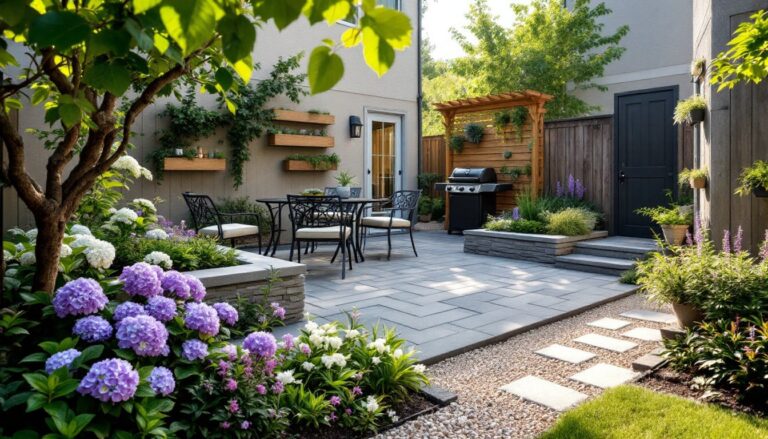
Patios and paths define zones and reduce mud. For a small area, consider permeable pavers or gravel instead of solid concrete: they allow drainage and often don’t require permits. Flagstone set in sand or gravel gives a natural, cottage feel. Brick laid in a herringbone or basketweave pattern works well in traditional or urban settings. For DIY installation, excavate 4–6 inches, lay landscape fabric, add 2–3 inches of crushed stone base (3/4-inch minus), tamp it, then top with 1–2 inches of leveling sand before setting pavers.
Edging, metal, plastic, or stone, keeps mulch and gravel in place and gives beds a clean line. Steel edging (14-gauge or thicker) is nearly invisible once installed and lasts decades.
Fire pits and water features add focal points. A small propane or gel-fuel fire bowl (portable, no gas line needed) works in tight spaces. For water, a bubbling urn or wall-mounted fountain delivers sound and movement without a pond’s footprint. Both need a small recirculating pump (50–200 GPH is typical) and a GFCI-protected outlet.
Decor should be purposeful. A couple of large, high-quality pieces (a sculptural planter, a bold outdoor art piece, a vintage bench) read better than a cluttered collection of small items. Outdoor rugs, throw pillows (in fade-resistant fabric like Sunbrella), and lanterns bring in color and texture.
Paint can transform a bland fence or shed. Exterior-grade paint or stain in a dark or bold color can make boundaries recede or, conversely, become a feature. Many outdoor design techniques recommend using a single color on vertical surfaces to unify the space visually.
If you’re pouring a new patio or building a retaining wall over 4 feet tall, check local codes, many jurisdictions require permits and engineered plans for structural work.
Conclusion
A small backyard isn’t a limitation, it’s a canvas that rewards smart planning and intentional choices. By layering vertical elements, defining zones, choosing appropriately scaled furniture and plants, and using light and hardscape to shape the experience, even the most compact yard can become a functional, beautiful extension of the home. Focus on what the space needs to do, invest in quality over quantity, and don’t be afraid to edit. The best small yards feel curated, not crammed.