Table of Contents
ToggleWater features can completely change how a backyard feels, and sounds. The right fountain, pond, or wall can turn a basic patio into a relaxing retreat, mask street noise, and even increase property value. But there’s a huge range of options, from budget-friendly DIY projects to ambitious pond installations. This guide breaks down the most practical and popular backyard water feature ideas, covering everything from classic tiered fountains to modern minimalist bowls, plus the planning and maintenance realities no one talks about until after they’ve already dug the hole.
Key Takeaways
- Backyard water feature ideas range from budget-friendly DIY container fountains ($40–$80) to larger installations like tiered fountains ($150–$1,500+) and ponds, each offering different benefits and maintenance requirements.
- Water features mask noise, create landscape focal points, boost property value, and attract beneficial wildlife, but require regular pump cleaning, algae management, and seasonal maintenance to stay functional.
- Before installing any water feature, call 811 to mark underground utilities, verify local codes (some ponds over 24 inches may require fencing), and ensure a GFCI-protected outlet is within 6 feet of your installation.
- Modern backyard water feature options include minimalist water walls, spillway bowls, and disappearing fountains that suit contemporary design while requiring proper leveling, low-flow pumps, and weatherproof electrical planning.
- Algae control relies on a combination of shade from water lilies, consistent pump circulation (8+ hours daily), and biological additives, while winter prep in cold climates requires draining fountains and storing pumps indoors to prevent freeze-thaw damage.
- Start with a simple fountain to learn maintenance basics before scaling up to complex ponds or streams, and position your water feature near patios or entertaining spaces where you’ll hear the water’s soothing sound regularly.
Why Add a Water Feature to Your Backyard?
Water features do more than look nice. The sound of running water masks traffic noise, barking dogs, and noisy neighbors, a real benefit in dense suburban areas. They also create focal points that anchor landscape design and draw the eye away from less attractive views like fences or utility boxes.
From a property value standpoint, well-designed water features can boost curb appeal and resale interest, especially in drought-conscious areas where recirculating systems show thoughtful water use. According to regional home improvement guides, outdoor water elements rank high among buyers looking for move-in-ready outdoor spaces.
They attract wildlife too. Birds, butterflies, and beneficial insects gravitate toward water sources, which can help with pollination if you’ve got vegetable or flower beds nearby. Just be prepared to clean out the occasional bird bath.
That said, water features require regular maintenance, pumps need cleaning, algae needs managing, and winter prep is non-negotiable in cold climates. If you’re not ready to commit to that upkeep, a dry streambed or decorative rock feature might be a better fit.
Classic Fountain Ideas for Every Budget
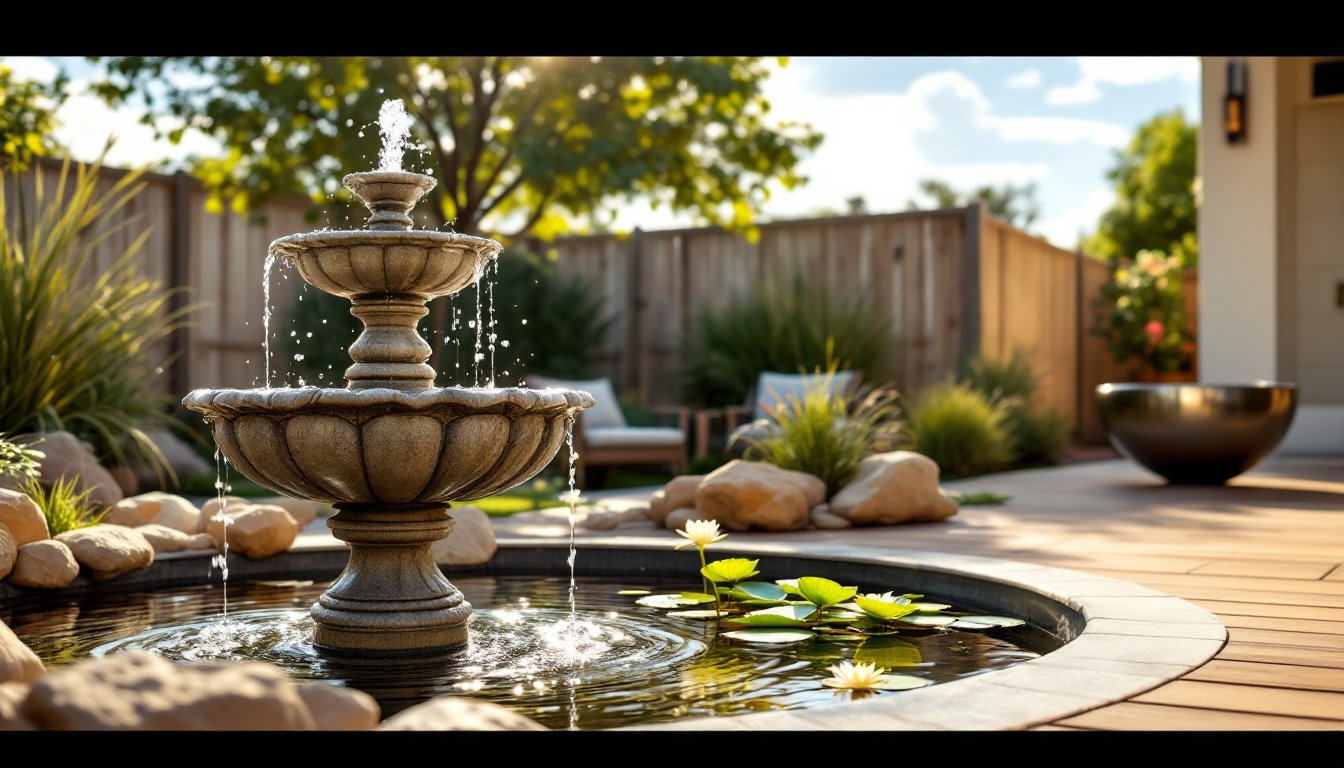
Tiered fountains remain the most popular backyard option for good reason, they’re self-contained, widely available, and scalable. A basic two-tier resin fountain runs $150–$300 and can sit on a patio or deck with no digging required. These typically include a small submersible pump (usually 50–120 GPH) and plug into a standard 120V GFCI outlet.
For a more permanent installation, cast stone or concrete tiered fountains range from $400 to $1,500+ depending on size and detail. These weigh 200–600 pounds and need a stable base, either a compacted gravel pad or poured concrete footer. Level matters. Even a half-inch slope will throw off the water flow and cause dry spots on the basins.
Wall-mounted fountains work well in smaller yards or courtyards. They mount to fences, retaining walls, or the side of a house and recirculate water into a basin below. Most require a ¾-inch PVC supply line run from the basin to the spout. Check local codes, some jurisdictions require backflow prevention if you’re tying into municipal water for initial fill.
For a unique touch, urn or jar fountains use a single large vessel with a bubbler insert. Drill a hole in the bottom (use a diamond-tipped hole saw for ceramic or stone), route the pump line through, and surround the base with river rock to hide the reservoir. These work great as entryway accents or outdoor entertaining focal points.
Natural Pond and Stream Designs
Building a backyard pond is a bigger commitment but delivers unmatched impact. Most homeowner-installed ponds range from 100 to 500 gallons. Anything larger usually requires professional grading, especially if you’re working with clay soil or high water tables.
Start with a 45-mil EPDM rubber liner, it’s flexible, puncture-resistant, and lasts 20+ years if installed over a proper underlayment (geotextile fabric or sand base). Avoid cheap PVC liners: they crack in cold weather. The formula for liner size is: length + (2 × depth) + 2 feet, by width + (2 × depth) + 2 feet. So a 6×8-foot pond that’s 2 feet deep needs roughly a 12×14-foot liner.
You’ll need a pond pump rated for your volume. A 250-gallon pond needs at least a 125 GPH pump to turn over the water every two hours, which helps with oxygenation and filtration. Add a biological filter if you’re keeping fish, goldfish and koi produce waste that can cloud water fast.
Streams and waterfalls require a pump with enough head pressure to push water uphill. A 6-foot vertical rise typically needs a pump rated for at least 1,000 GPH. Use flexible PVC or corrugated tubing (1.5–2 inches diameter) to run from the pond to the stream head, and bury it under rocks or mulch.
Permit check: Some municipalities classify ponds over 24 inches deep as pools, which triggers fencing and setback requirements. Verify local codes before you dig. And keep ponds at least 10 feet from property lines to avoid drainage disputes with neighbors.
DIY-Friendly Water Feature Projects
Container fountains are the easiest weekend build. Grab a glazed ceramic pot (no drainage hole needed), a small submersible pump, and some river rock. Place the pump in the bottom, fill with water to cover it by 2–3 inches, and top with rock to hide the pump. Plug it in and adjust the flow valve. Total cost: $40–$80.
For a disappearing fountain, dig a hole slightly larger than a plastic reservoir basin (available at garden centers for $30–$60). Set the basin level, place a pump inside, and lay a rigid grate or rebar grid over the top. Stack stone, driftwood, or a drilled boulder on the grate, connect the pump tubing, and cover the grate with decorative rock. Water bubbles up and disappears back into the hidden reservoir, no exposed basin to clean.
Rain chain installations replace downspouts and guide roof runoff into a basin or dry well. They’re not recirculating, so they only work when it rains, but they add sound and visual interest. Hang them with an S-hook or gutter adapter, and make sure the basin below can handle your roof’s square footage during heavy storms (1 inch of rain on 100 square feet = roughly 62 gallons).
If you want a natural look without the complexity of a pond, build a dry streambed with a hidden reservoir. Excavate a shallow channel, line it with landscape fabric, and fill with gravel and river rock. Bury a flexible liner and pump at one end, then let water trickle down the rock bed and recirculate. It mimics a natural creek without standing water, which means fewer mosquitoes and less maintenance.
Modern Minimalist Water Walls and Bowls
Water walls work best on contemporary homes or backyard entertaining spaces with clean lines. They’re typically made from stainless steel, copper, or tempered glass panels mounted to a frame with water flowing down the surface into a narrow trough. Pre-fabricated kits run $800–$3,000 depending on size (common dimensions are 4×6 feet or 6×8 feet).
Installation requires a level mounting surface, either an exterior wall with proper flashing or a freestanding frame anchored into a concrete pad. The pump sits in the trough and pushes water to a manifold at the top, which distributes flow evenly across the panel. Use a low-flow pump (around 300–500 GPH) to avoid splashing, and install a ball valve inline so you can dial in the flow rate.
Bowl fountains are low-profile and fit tight spaces like side yards or small patios. They range from 12 to 48 inches in diameter and can be ceramic, concrete, or cast stone. The pump sits inside, usually with a fountain head that creates a bubbling or umbrella spray pattern. Most hold 5–15 gallons and need weekly top-offs to compensate for evaporation.
For a high-end look, consider spillway bowls stacked in tiers or arranged in a row. Water flows from one bowl to the next, creating a stepped cascade effect. These require precise leveling and a pump powerful enough to lift water to the top bowl, figure at least 600 GPH for a three-bowl setup with a 3-foot lift.
All these modern designs benefit from LED accent lighting. Submersible spotlights (12V low-voltage) can highlight the water flow at night without running new 120V circuits. Just make sure any electrical work near water meets NEC Article 680 requirements for wet locations.
Planning and Maintenance Essentials
Before you buy anything, map your utilities. Call 811 at least two business days before digging to get underground lines marked, gas, electric, water, and telecom. Hitting a line isn’t just dangerous: it’s expensive.
Electrical access is the next hurdle. Most water features need a GFCI-protected outlet within 6 feet. If you don’t have one, hire an electrician, running a new outdoor circuit isn’t a DIY task unless you’re comfortable with load calculations and weatherproof boxes. Expect to pay $200–$500 for a new outlet installation.
Water source matters too. You’ll need a hose bib nearby for initial fill and top-offs. A 200-gallon pond can lose 1–2 inches per week to evaporation in summer, which is roughly 10–20 gallons depending on surface area.
Algae control is the biggest ongoing headache. Sunlight + nutrients = green water. Combat it with a combination of shade (water lilies, floating plants), circulation (run the pump at least 8 hours daily), and biological additives or UV clarifiers for larger ponds. Avoid using chlorine or bleach unless you’ve removed fish and plants, it’ll kill beneficial bacteria.
Pumps need cleaning every 4–6 weeks during peak season. Pull the intake screen, rinse off debris, and check the impeller for clogs. Hard water areas should descale pumps annually with a 50/50 white vinegar solution.
Winter prep depends on climate. In USDA zones 6 and colder, pull pumps and store them indoors, or use a de-icer to keep a small opening in pond ice (fish need gas exchange). Drain fountains completely and cover them, or bring smaller pieces into a garage or shed. Cracked basins from freeze-thaw cycles aren’t covered by most warranties.
Conclusion
The best water feature is the one that fits your budget, space, and willingness to maintain it. A simple bubbler fountain can deliver 80% of the ambiance with 20% of the work compared to a full pond. Start small, get comfortable with pump maintenance and water chemistry, then scale up if you want more. And remember: the sound of running water is half the point, so prioritize placement where you’ll actually hear it, near a patio, deck, or favorite outdoor entertaining spot, not buried in a back corner behind the shed.