Table of Contents
ToggleA well-designed stone patio can anchor your entire backyard, adding both function and serious resale value. Unlike wood decks that rot or concrete slabs that crack and look institutional, natural stone ages gracefully and brings texture and character that improves over time. Whether you’re after a formal entertaining space or a casual fire pit area, stone delivers durability that stands up to freeze-thaw cycles, UV exposure, and heavy foot traffic without constant maintenance. This guide covers classic flagstone layouts, modern bluestone designs, rustic fieldstone installations, and budget-conscious alternatives, plus the planning details that separate a weekend warrior project from one that needs a pro.
Key Takeaways
- Natural stone patios last 50+ years with minimal upkeep, outlasting wood decks and concrete by 25–35 years, making stone patio ideas a smart long-term investment for durability and resale value.
- Flagstone and bluestone are the top materials: flagstone offers organic irregular layouts ideal for DIY projects, while bluestone delivers clean contemporary lines and comes in thermal finishes for improved traction in high-traffic areas.
- Proper base preparation is critical—excavate to accommodate 4–6 inches of compacted gravel, 1–2 inches of sand, and maintain a 2% slope away from house foundations to prevent water damage and settling.
- Budget-friendly alternatives like crushed stone, urbanite (recycled concrete), and stepping-stone paths can reduce costs to under $3 per square foot while maintaining function and style.
- Dry-laid flagstone is the most beginner-friendly installation method using a plate compactor (rent for ~$60/day), while mortared designs and large format pavers benefit from professional installation on sloped or problem sites.
- Polymeric sand costs more than regular masonry sand but is worth the investment for high-use patios, preventing weeds and ant colonization while locking pavers in place.
Why Choose Stone for Your Patio?
Stone patios outlast nearly every other hardscape material. Natural stone, including flagstone, bluestone, slate, and fieldstone, can last 50+ years with minimal upkeep, while pavers and stamped concrete typically need resurfacing or replacement within 15–25 years.
Thermal performance matters more than most homeowners realize. Light-colored limestone or travertine stays cooler underfoot in full sun, while darker slate and bluestone absorb heat, great for extending the season in cooler climates but uncomfortable barefoot in Arizona summers.
From a code perspective, stone patios are generally non-structural and don’t require permits in most jurisdictions, though you’ll want to check local rules if you’re within setback zones or building over utilities. Drainage requirements vary: if your patio abuts the house foundation, most building codes require a 2% slope away from the structure (roughly 1/4 inch per foot) to prevent water intrusion.
Material costs range widely. Flagstone runs $15–$30 per square foot installed, bluestone $20–$35, while fieldstone and broken concrete (urbanite) can drop below $10 per square foot if you source locally. Budget an additional 10–15% for base material (crushed stone, sand) and edge restraints.
Classic Flagstone Patio Designs
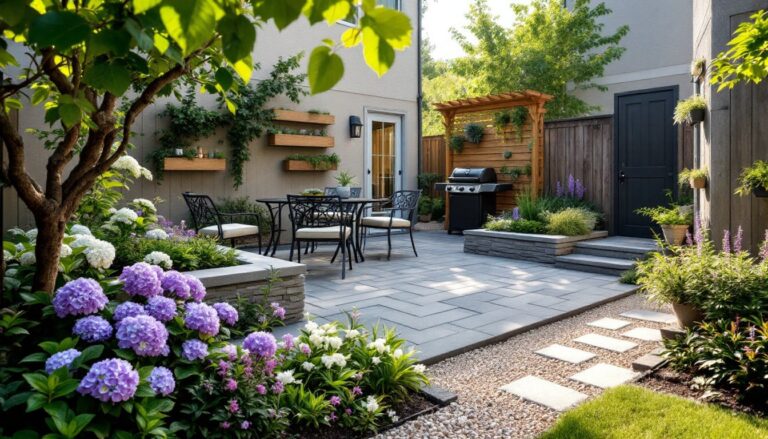
Flagstone is the go-to for organic, irregular layouts. These flat sedimentary stones (typically sandstone or quartzite) come in random shapes, which means every installation is unique. Thickness ranges from 1 to 2 inches: thinner material costs less but requires a more stable base to prevent cracking.
Dry-laid flagstone is the most DIY-friendly approach. Set stones on a 4–6 inch compacted gravel base topped with 1–2 inches of coarse sand. Use a plate compactor (rent one for about $60/day) to compact in 2-inch lifts, skipping this step is the #1 cause of settling and uneven surfaces. Fill joints with polymeric sand or plant low-growing groundcovers like thyme or sedum for a softer look.
For a more formal design, mortared flagstone on a concrete slab offers stability and a cleaner joint line. This requires a 4-inch reinforced concrete base (6×6 W1.4×W1.4 welded wire mesh minimum), which often triggers permit requirements. Mortar joints should be 3/8 to 1/2 inch wide and tooled to shed water.
Irregular vs. cut flagstone: Random “crazy paving” feels cottage-style and hides layout imperfections, while guillotined rectangular pieces in a running bond or ashlar pattern read more contemporary. If you’re cutting your own, a 7-inch diamond blade angle grinder handles most flagstone: thicker pieces need a wet saw. Wear a N95 respirator, silica dust from cutting stone is a serious lung hazard.
Modern Bluestone and Slate Patio Concepts
Bluestone (a dense sandstone, typically from Pennsylvania or New York) and slate offer the clean lines and consistent color that modern designs demand. Both come in thermal (textured) and natural cleft finishes: thermal bluestone has a flamed surface that improves traction when wet and is worth the extra $2–4 per square foot in high-traffic areas.
For contemporary stone backyard ideas, consider large-format pavers: 24×24-inch or 24×36-inch bluestone slabs create a minimalist grid with fewer joint lines. These require a solid base, either a concrete slab or an open-graded base (3/4-inch crushed stone compacted to 95% density, topped with 1-inch coarse sand and a 1/8-inch setting bed of stone dust). Large slabs are heavy: a 24×24×2-inch bluestone paver weighs roughly 100 pounds, so plan on a helper and a paver cart or furniture dolly.
Mixed module layouts combine multiple sizes (12×12, 12×24, 24×24) in a repeating pattern for visual interest without the chaos of random flagstone. Many suppliers sell pre-planned kits that include the right ratio of sizes.
Color consistency varies by quarry and batch. Bluestone ranges from blue-gray to lilac to rust: slate spans charcoal, green, purple, and red. Order 10% extra and dry-lay the entire patio before setting anything permanently so you can distribute color variation evenly. Don’t return the surplus until the job is done, you’ll likely need a replacement piece or two.
Rustic Fieldstone and Cobblestone Patios
Fieldstone and cobblestone bring old-world texture that works beautifully for cottage gardens, farmhouse styles, and historic home renovations. Both are glacial or river-rounded stones, which makes them tricky to lay flat but visually striking.
Fieldstone patios typically use flat-face fieldstone (stones with at least one flat side) set in a thick mortar bed over concrete. Because the stones are irregular in thickness, you’ll need to butter the back of each stone individually with mortar to bring it level with its neighbors, a time-consuming process. This isn’t a fast weekend project: plan on 2–3 days for a 150-square-foot patio with a helper.
Cobblestone (historically granite setts, 4–6 inches across) creates a durable, old-European look that’s nearly indestructible but rough underfoot. Traditional installation sets cobbles tightly in sand over a gravel base, with sand swept into the joints. For a more stable version, many hardscaping professionals recommend a concrete collar: pour a 6-inch concrete perimeter to lock the edges, then lay cobbles on sand within the frame.
Small stone patio ideas often incorporate fieldstone as edging or banding rather than the main surface, think bluestone field with fieldstone borders, which keeps costs down and installation manageable while adding rustic character. You can also use fieldstone as step risers or low retaining walls (under 18 inches, no permit typically required) around a simple gravel or crushed stone patio.
Budget-Friendly Stone Patio Options
Crushed stone or pea gravel patios are the most affordable stone option, typically under $3 per square foot for materials. Use 3/4-inch crushed stone (also called “3/4-inch minus” or “crusher run”) for the base and top it with 1/4-inch to 3/8-inch pea gravel or decomposed granite for a finished surface. Install metal or plastic edge restraint (about $1.50 per linear foot) to prevent migration into lawn areas.
This approach drains beautifully and requires zero masonry skill, but it’s not ideal for dining furniture (chair legs sink) or high heels. Topping up the gravel every 2–3 years is normal maintenance.
Urbanite (broken concrete repurposed as flagstone) is gaining traction as a low-cost, eco-friendly alternative. Demolition contractors and Craigslist often have it free for the hauling. Select pieces 3–4 inches thick with rebar removed (use a reciprocating saw with a metal-cutting blade: wear safety glasses and gloves). Lay it exactly like flagstone. The industrial look isn’t for everyone, but it’s perfect for modern or urban-farmhouse aesthetics. Regional home and garden sources often showcase creative urbanite installations.
Stepping-stone paths are another small stone patio idea that stretches a budget. Space 18-inch flagstone or cut bluestone rounds 4–6 inches apart (one comfortable stride) through groundcover or gravel. You’ll use a fraction of the stone compared to a full patio, and it still defines an outdoor living zone.
Regional stone is almost always cheaper than imported material. Check local quarries and landscape yards, “Pennsylvania bluestone” costs far less in Pennsylvania than in California. Ask about select grade vs. natural grade or #1 vs. #2 quality: the latter has more color variation and minor flaws but can save 30–40% without compromising durability.
Design Tips for Planning Your Stone Patio
Start with function, not aesthetics. Define how you’ll use the space, dining for 8, fire pit seating, solo coffee spot, and size accordingly. A 48-inch round table with chairs needs at least a 10×10-foot patio: a 72-inch rectangular table wants 12×14 feet minimum to pull chairs out comfortably.
Sun and shade patterns change seasonally. Walk your site at different times of day before committing. Southern and western exposures get intense afternoon heat: consider pergola framing or shade sails if you’re in a hot climate. Northern exposures in cooler regions might need extra sun to dry out after rain and stay comfortable into fall.
Base prep is everything. Excavate to a depth that accommodates your base layers plus stone thickness, keeping the finished surface at or just above grade. For a dry-laid flagstone patio with 1.5-inch stone: dig down 7.5 inches (4 inches gravel + 2 inches sand + 1.5 inches stone). String lines and a laser level (rent for $25/day or buy a decent one for $80) keep everything true. A patio that puddles because it’s out of level will haunt you every rain.
Polymeric sand vs. regular joint sand: Polymeric sand hardens when wet, locking pavers in place and resisting weed growth and ant colonization. It costs 3–4× more than masonry sand but is worth it for high-use patios. Do not use it if your base drains poorly, it needs to cure dry and won’t harden in saturated conditions.
Edge restraint prevents creep. Even a mortared patio benefits from a concrete or stone border that locks the perimeter. For dry-laid installations, use aluminum or steel paver edging spiked every 12 inches, or a soldier course (stones set vertically) backfilled with concrete.
Many homeowners draw inspiration from regional design traditions, adapting stone choices and layout patterns to match local architecture and climate. Don’t skip the planning phase, measure twice, dig once. If your site has slope over 10%, poor drainage, or tree roots, bring in a landscape contractor for at least a consultation. Some problems are easier to solve on paper than with a wheelbarrow of stone already delivered.
Conclusion
Stone patios reward careful planning and honest base prep with decades of low-maintenance outdoor living. Whether you’re laying a rustic fieldstone fire pit pad or a geometric bluestone dining terrace, the same principles apply: compact your base in lifts, maintain proper slope for drainage, and don’t rush the layout phase. Most DIYers can handle dry-laid flagstone or gravel patios with rental equipment and a long weekend: mortared installations and sloped sites often justify bringing in a pro. Choose stone that fits your climate, your aesthetic, and your skill level, and you’ll have a backyard centerpiece that only gets better with age.