Table of Contents
ToggleA hot tub on a deck isn’t just about soaking, it’s about creating a backyard retreat that handles the structural load, weather exposure, and daily wear of a 3,000–5,000 pound water-filled appliance. The right design keeps the tub accessible, integrates entertaining space, and doesn’t turn into a maintenance nightmare. Whether building new or retrofitting an existing platform, these hot tub deck ideas balance structural requirements with features like privacy screens, built-in benches, and lighting that works year-round. Most importantly, they address the practical challenges: proper joist spacing, electrical access, drainage, and code compliance before aesthetics.
Key Takeaways
- Hot tub deck ideas must prioritize structural engineering with reinforced 2×10 or 2×12 joists at 12-inch spacing to safely support the 4,000+ pounds of a filled spa.
- Multi-level hot tub deck designs separate wet traffic from dry entertaining spaces while creating visual interest and allowing upper-level sightlines over the tub.
- Privacy screens using lattice panels, horizontal slat fencing, living walls, or pergolas with shade are essential features that transform exposed decks into secluded retreats.
- Built-in benches and bar-height counters maximize usable space for entertaining while anchored bench framing to deck joists prevents shifting and debris trapping.
- Material selection matters: pressure-treated lumber for framing, composite or cedar for decking surfaces, and slip-resistant finishes are critical for safety around water and chemicals.
- Code-compliant electrical with GFCI protection, low-voltage LED lighting, and proper drainage sloped away from the house are non-negotiable practical requirements that prevent costly retrofits.
Why a Well-Designed Hot Tub Deck Matters
Hot tubs demand engineered support. A filled six-person spa weighs 4,000+ pounds concentrated in an 8×8-foot footprint. Deck joists need to handle 100 pounds per square foot (psf) dead load minimum, often requiring 2×10 or 2×12 joists at 12-inch on-center spacing instead of the standard 16-inch used for typical decking.
Skip the structural engineering and you’re risking sagging, cracked acrylic shells, or catastrophic deck failure. Local building codes typically require a permit for hot tub installations due to load and electrical considerations. Most jurisdictions want stamped plans from a structural engineer for decks supporting more than standard live loads.
Beyond structure, deck design affects usability. Poor layouts force users to climb over the tub to reach seating. No privacy means neighbors get a show. Lack of lighting turns evening soaks into obstacle courses. A thoughtful hot tub deck integrates access, drainage (water will spill and splash), slip-resistant surfaces, and GFCI-protected electrical within 10–15 feet of the tub per NEC Article 680.
Multi-Level Deck Designs for Hot Tubs
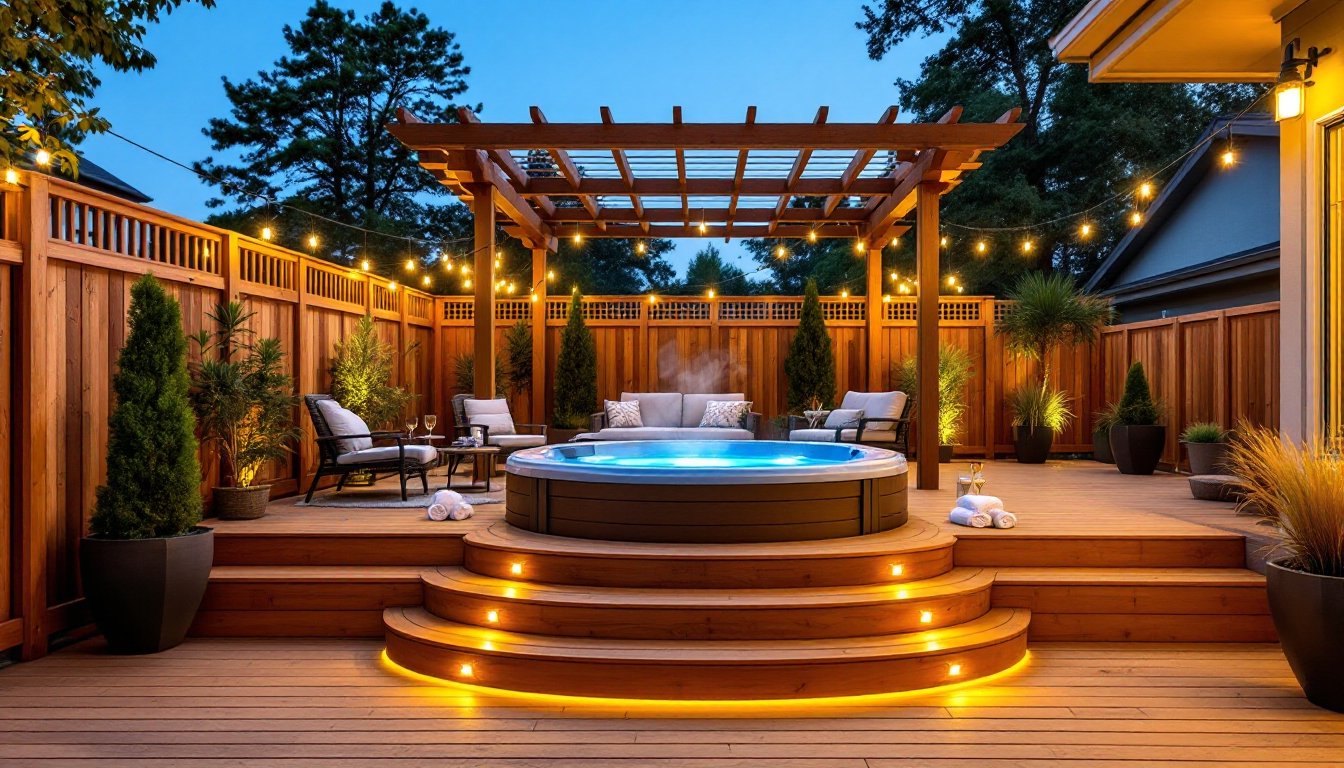
Multi-level backyard hot tub deck ideas create visual interest and functional zones. The tub sits on the lower platform while the upper level handles dining, grilling, or lounging, keeping wet traffic separated from dry entertaining.
Design considerations:
- Step risers: Keep them consistent at 7–7.5 inches. Code (IRC R311.7) requires uniformity within 3/8 inch to prevent tripping.
- Tub placement: Position the spa on the lower tier to reduce the perceived bulk and allow upper-level sightlines over it, not into it.
- Structural independence: Frame each level separately with its own footings and ledger attachments. The hot tub platform needs those beefier joists: the upper deck can use standard 2×8s at 16-inch centers for a typical 40-50 psf live load.
- Drainage: Slope the tub platform 1/4 inch per foot away from the house. Install a perimeter drainage system or gravel bed underneath to handle splashed water and snowmelt.
Many ideas for deck design incorporate level changes to handle grade transitions, making them a natural fit for hot tub installations on sloped yards.
Privacy-Focused Hot Tub Deck Ideas
Privacy screens transform deck with hot tub ideas from exposed to secluded. Options range from fast-growing evergreens to structural solutions.
Lattice panels with climbing vines: Pressure-treated or cedar lattice mounted to 4×4 posts creates immediate screening. Plant clematis, honeysuckle, or climbing hydrangea at the base. Space posts 6–8 feet apart and anchor them with concrete footings below frost line, typically 36–48 inches depending on region.
Horizontal slat fencing: Build using 1×4 or 1×6 cedar or composite boards with 1–2 inch gaps. Mount to a 2×4 frame between posts. This style allows airflow while blocking sightlines. Stain or seal within two weeks of installation to prevent UV damage and moisture intrusion.
Living walls: Freestanding planter boxes with tall ornamental grasses (miscanthus, switchgrass) or bamboo (clumping varieties like Fargesia to avoid invasive spreading). Use 24-inch deep planters minimum to support root systems and prevent winter kill in cold climates.
Pergola with retractable shade: Overhead coverage adds vertical privacy from second-story neighbors. Use 2×8 or 2×10 beams for the main structure, 2×6 rafters at 16–24 inch spacing. Add retractable canopy fabric or outdoor curtains on tracks. Ensure the pergola framing doesn’t interfere with hot tub cover removal, allow at least 30 inches of clearance on the access side.
Built-In Seating and Entertaining Spaces
Built-in benches around the tub perimeter serve as towel staging, drink holders, and post-soak seating. These jacuzzi deck ideas maximize usable square footage without adding freestanding furniture that shifts and traps debris.
Bench construction:
- Height: 18 inches for comfortable seating. Use 2×4 framing with 2×6 or 2×8 cap boards.
- Depth: 16–20 inches provides adequate seat depth without eating too much deck space.
- Support: Anchor bench framing to deck joists, not just decking boards. Use joist hangers or blocking between joists every 24 inches.
- Material: Match the decking or contrast with a different species. Composite decking resists mildew and doesn’t splinter, making it ideal for bare-skin contact.
Storage integration: Build flip-top bench seats with waterproof hinges to store chemicals, towels, or pool toys. Line the interior with marine-grade plywood and apply exterior-grade polyurethane to prevent moisture damage.
Bar-height counters: Install a 42-inch tall section with a 12-inch overhang for drink placement. Frame with 4×4 posts and 2×6 top rails. Add LED strip lighting underneath for ambiance and safety.
For more elaborate entertaining setups, homeowners often reference resources like Houzz to visualize built-in features and coordinate materials before ordering lumber.
Material Choices for Your Hot Tub Deck
Material selection impacts maintenance, safety, and longevity for hot tub on deck ideas. Wet conditions and chemical exposure (chlorine, bromine) accelerate deterioration.
Pressure-treated lumber: Most cost-effective for framing and joists. Use ground-contact rated (.60 pcf retention) for posts and any member within 6 inches of soil. Southern yellow pine is standard: incising improves preservative penetration. Allow 6–12 months for the wood to dry before staining.
Cedar or redwood: Naturally rot-resistant, requires no pressure treatment. Use for decking and visible components. More expensive, expect 2–3× the cost of PT lumber. Apply a penetrating oil-based sealer annually to maintain color and water resistance.
Composite decking: Brands like Trex, TimberTech, or Azek resist moisture, mildew, and fading. Grooved edges allow for hidden fastener systems that eliminate surface screws. Check manufacturer specs for hot tub compatibility, some products have temperature or weight restrictions. Composite expands and contracts more than wood: leave 1/4-inch gaps at ends and 1/8-inch gaps between boards.
Concrete pavers or porcelain tile: Set on a compacted gravel base with polymeric sand joints. Provides a stable, level surface that won’t rot. Requires frost-resistant pavers in cold climates. More labor-intensive installation but minimal long-term maintenance.
Slip resistance: Critical around hot tubs. Choose textured composite, grooved lumber, or apply non-slip deck stain with aluminum oxide grit. Wet bare feet + smooth surfaces = ER visits.
Safety considerations for structural work are frequently discussed by experts at Bob Vila, particularly when it comes to proper material selection and fastener choices for outdoor applications.
Lighting and Ambiance Features
Lighting extends usability into evening hours and prevents trips on steps and tub edges. Plan electrical during framing, retrofitting is expensive.
Low-voltage LED systems: Run 12V or 24V systems from a transformer located in a weatherproof enclosure. Use direct-burial landscape wire (14-gauge minimum for runs under 100 feet). Install:
- Step lights: Recessed fixtures in riser faces or under tread noses. Space one per step or every other step on long runs.
- Post cap lights: Top 4×4 or 6×6 railing posts with solar or low-voltage caps. Provides ambient glow and defines deck perimeter.
- Under-rail lighting: LED strip mounted to the underside of top rails or bench caps. Use aluminum channels to diffuse light and protect the strip from impact.
String lights or Edison bulbs: Suspend between posts or pergola beams using AWG 16 outdoor-rated wire and weatherproof sockets. Install on a dimmer switch for adjustable brightness.
GFCI protection: All deck outlets and lighting circuits require ground-fault circuit interrupters per NEC 210.8. Install weatherproof covers (in-use covers stay closed even with a plug inserted).
Timers and smart controls: Integrate with home automation systems for scheduling and remote control. Lutron Caseta and similar platforms handle low-voltage and line-voltage loads.
Accent lighting: Uplights in planters highlight greenery. Color-changing RGB strips add party ambiance but can feel gimmicky, stick with warm white (2700–3000K) for daily use.
Always follow manufacturer instructions for wet-location fixtures and maintain proper clearances from water sources per code.
Conclusion
Hot tub deck ideas work when they start with structural integrity and build outward to aesthetics. Engineered joists, proper drainage, slip-resistant surfaces, and code-compliant electrical aren’t optional, they’re the foundation. Multi-level layouts, privacy screens, built-in seating, and thoughtful lighting transform the platform from functional to inviting. Choose materials that handle moisture and chemicals, plan for cover access and maintenance, and don’t skip the permit process. A well-executed hot tub deck delivers years of low-maintenance use.