Table of Contents
ToggleA backyard shouldn’t just sit there, it should earn its square footage. Whether entertaining guests, relaxing after work, or adding curb appeal for resale, the right decor turns dirt and grass into an extension of the home. The good news: transforming outdoor space doesn’t require a landscape architect or a five-figure budget. Most impactful changes involve simple materials, weekend labor, and a plan that balances function with aesthetics. This guide walks through practical, proven backyard decor ideas that fit real budgets and skill levels.
Key Takeaways
- Create distinct outdoor zones for dining, lounging, and entertaining using furniture placement, affordable hardscape elements like pavers ($800–$1,500) and gravel paths, or outdoor rugs to define spaces without major construction.
- Strategic backyard decor lighting—including low-voltage LED landscape lights, Edison-string lights, and layered lanterns—extends usable hours and sets ambiance at a fraction of professional costs.
- Incorporate native plants, container gardens, and raised beds to soften hardscapes and add color while requiring less maintenance once established in your local climate zone.
- A focal point like a fire pit, water feature, or prominent planter gives the backyard intentional design and draws visitors through the space with purpose.
- Transform your backyard on a budget with weekend DIY projects such as pallet furniture ($30), painted concrete patios, mason jar lanterns, and outdoor curtains that rival store-bought decor.
Create Cozy Outdoor Living Zones
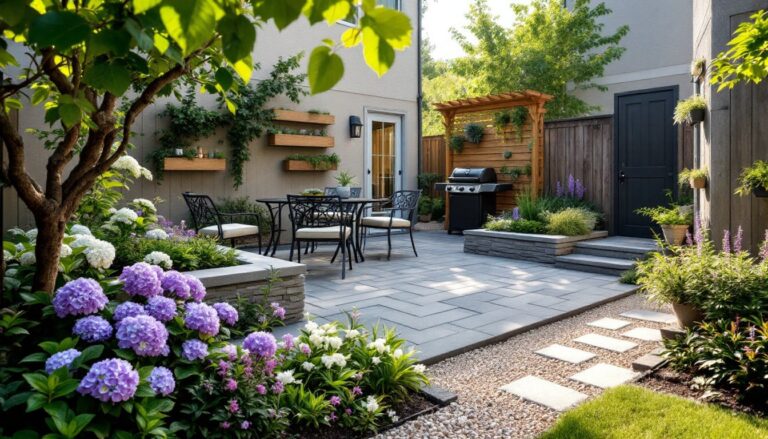
Defining distinct zones gives a backyard purpose and flow. Instead of one undifferentiated lawn, carve out areas for dining, lounging, cooking, and play.
Start with furniture placement. A dining table with six to eight chairs anchors an eating zone: position it within 10 to 15 feet of the back door or grill for easy access. For a lounge area, arrange weather-resistant seating, wicker, teak, or powder-coated aluminum, around a low coffee table or fire pit. Leave at least 36 inches of clearance between furniture edges for comfortable movement.
Use hardscape elements to reinforce zones. A 12×12-foot paver patio costs roughly $800 to $1,500 in materials (region and paver type vary) and provides a stable, level surface for dining furniture. Gravel paths (¾-inch crushed stone) cost about $40 per cubic yard and define walkways between zones. For a quicker solution, outdoor rugs (see below) can visually separate spaces without excavation.
Vertical dividers add privacy and structure. A lattice panel (4×8 feet, $30 to $60) mounted on 4×4 posts set 24 inches deep in concrete creates a backdrop for climbing plants or simply screens one zone from another. Pergolas (DIY kits start around $600) provide overhead definition and a framework for string lights or shade cloth.
Mastering these outdoor hosting zones makes every gathering feel intentional rather than improvised.
Add Ambiance With Strategic Lighting
Lighting extends usable hours and sets mood. A backyard that goes dark at sunset is a missed opportunity.
Install low-voltage LED landscape lights (12V systems) along pathways and around key features. A basic kit with transformer, cable, and six fixtures runs $100 to $200. Bury the 14- or 16-gauge cable 6 inches deep (check local codes) and space fixtures 8 to 10 feet apart for even coverage. Uplighting a tree trunk or architectural feature with a 3-watt spotlight creates drama without glare.
For dining and lounge zones, use Edison-bulb string lights (also called bistro lights). These outdoor entertaining essentials hang from screw eyes mounted into fascia boards, pergola beams, or dedicated 4×4 posts. Use outdoor-rated cable (SJTW or better) and GFCI-protected outlets. String lights typically draw 0.5 to 1 watt per bulb: a 48-foot strand pulls about 25 watts total, making them efficient for all-night use.
Solar path lights work for low-traffic areas but often disappoint in performance. Quality units with replaceable NiMH batteries cost $15 to $25 each and need 6+ hours of direct sun to charge fully. They’re convenient but don’t rely on them for primary illumination.
String Lights and Lanterns
String lights are the workhorse of backyard ambiance. Mount them in a zigzag or catenary pattern (gentle sag between posts) rather than pulling them tight, which stresses sockets and looks rigid. Use coated steel cable and turnbuckles for permanent installations spanning more than 15 feet.
Lanterns, tabletop or hanging, add layers. Battery-operated LED candles (flicker effect, runtime 100+ hours) eliminate fire risk and work inside metal or glass hurricane lanterns. Hang lanterns from shepherd’s hooks (5 to 7 feet tall, $12 to $20) driven 10 inches into the ground, or cluster them on tables.
For permanent fixtures, consider a post-mount lantern on a 4×4 treated post set in concrete. Run UF-B cable (direct-burial rated) from a GFCI breaker to a weatherproof junction box at the post base. This is basic electrical work: if unfamiliar with the National Electrical Code (NEC) requirements for outdoor circuits, hire a licensed electrician.
Incorporate Natural Elements and Greenery
Plants soften hardscape and inject color. But greenery requires planning, pick species suited to the climate zone, sun exposure, and maintenance tolerance.
Container gardens offer flexibility. Use resin or fiberglass planters (lighter than ceramic, frost-resistant) in sizes from 12 to 24 inches diameter. Fill with potting mix (not garden soil, which compacts), leaving 2 inches below the rim for watering. Group three to five containers of varying heights for visual interest.
For perennials, choose native plants adapted to local rainfall and temperature swings. They require less water and fertilizer once established. In arid climates, consider agave, lavender, or yarrow: in humid regions, hostas, ferns, or black-eyed Susans. Many regional outdoor living guides provide plant lists by hardiness zone.
Raised beds (for vegetables, herbs, or flowers) are straightforward DIY projects. Build frames from 2×10 or 2×12 cedar or composite boards, fastened at corners with 3-inch exterior screws or galvanized brackets. A 4×8-foot bed (11 inches tall) holds roughly 11 cubic feet of soil mix, budget about $60 to $90 for a blend of compost, peat (or coir), and vermiculite.
Vertical gardens save ground space. Mount a modular pocket planter (fabric or plastic) on a fence or exterior wall, ensuring drainage holes aren’t blocked. For a custom solution, attach horizontal cedar slats (1×4 or 1×6) to a frame, creating shelves for small pots.
Greenery also enhances backyard entertaining techniques by framing gathering spaces and adding fresh herbs within arm’s reach of the grill.
Define Spaces With Rugs and Textiles
Outdoor rugs anchor furniture groupings and visually separate zones without construction. Look for polypropylene or polyester rugs: both resist moisture, mildew, and fading. A 5×7-foot rug fits under a small bistro set: an 8×10 or 9×12 works for a full dining table or sectional sofa.
Size matters: the rug should extend at least 24 inches beyond furniture edges so chairs remain on the rug when pulled out. Skimping on size makes the setup look cramped. Prices range from $80 for basic flatweave styles to $400+ for hand-tufted or textured designs.
Rug pads prevent shifting on hard surfaces. Use non-slip rubber mesh pads cut to size: they also allow airflow underneath, reducing mold risk. On grass, use ground stakes (long U-pins) at corners if wind is an issue.
Outdoor cushions and pillows add comfort and color. Choose fabrics labeled solution-dyed acrylic (brand names include Sunbrella, Outdura). These resist UV and water but still need occasional cleaning, most can be machine-washed on gentle cycle. Foam inserts should be quick-dry polyurethane with drainage channels.
Store cushions during heavy rain or winter unless they’re truly all-weather. Even top-grade fabrics last longer with minimal moisture exposure. A deck box (150-gallon capacity, $150 to $300) keeps cushions dry and doubles as extra seating. For a smarter hosting setup, keep a few extra cushions on hand for unexpected guests.
Install Eye-Catching Focal Points
A focal point draws the eye and gives the backyard a sense of destination. Without one, the space can feel aimless.
Fire pits top the list. A wood-burning steel fire ring (36 to 44 inches diameter) costs $150 to $400 and requires a non-combustible base, a 6-inch layer of gravel or paver sand inside a steel ring, surrounded by flagstone or concrete pavers. Keep the pit at least 10 feet from structures and 25 feet from overhanging branches (local fire codes may vary). If burning wood, use seasoned hardwood (oak, maple) for cleaner combustion.
Gas fire pits (propane or natural gas) eliminate smoke and ash. DIY kits start around $300 (burner, pan, lava rock or glass): total cost with enclosure materials (concrete block, stone veneer, or paver surround) runs $600 to $1,200. For natural gas, run a black steel or CSST gas line from the meter, this requires a licensed plumber or gas fitter and a permit.
Water features add sound and movement. A self-contained fountain (urn, tiered, or basin style) needs only a GFCI outlet. Units range from $100 (small resin) to $800+ (cast stone). Larger installations, pond kits with pumps and liners, start around $400 for a 6×8-foot footprint. Excavate to 18 to 24 inches deep, line with underlayment fabric and a 45-mil EPDM liner, and edge with flagstone.
Sculpture or large planters work as static focal points. A 3-foot-tall ceramic or fiberglass urn (planted with ornamental grass or a small tree) commands attention. Place it at a sightline terminus, end of a path, corner of a patio, or center of a lawn panel. Prominent landscaping elements guide visitors through the yard with intention.
Budget-Friendly DIY Decor Projects
High impact doesn’t require high spend. A few weekend projects can overhaul the look without touching savings.
Pallet furniture: Disassembled heat-treated pallets (marked HT, not chemically treated MB) yield enough wood for a bench, coffee table, or vertical planter. Sand all surfaces with 80-grit then 120-grit paper (wear a dust mask), apply exterior wood stain or paint, and seal with polyurethane or spar varnish. A basic pallet bench costs under $30 in hardware and finish.
Painted concrete: Existing concrete patios or walkways can be refreshed with concrete stain or porch and patio paint. Clean the surface with TSP (trisodium phosphate) or a concrete degreaser, rinse, and let dry 48 hours. Apply concrete primer if the surface is porous or previously sealed. Finish with acrylic latex porch paint in two coats (coverage: ~400 square feet per gallon). Total cost for a 10×12 patio: $60 to $100.
Mason jar lanterns: Drill a drainage hole in the lid, thread in a solar stake light (remove the stake), and hang the jar by wire or jute rope. Cluster several along a fence or from tree branches. Cost per lantern: $3 to $5.
Cinder block planters or benches: Stack 8×8×16-inch concrete blocks (about $1.50 each) without mortar for temporary configurations. Lay blocks on edge for planter boxes, fill cavities with soil, and plant succulents or herbs. For a bench, stack two rows capped with a 4×4-foot sanded plywood top and outdoor cushions.
Outdoor curtains: Hang outdoor fabric panels (water-resistant polyester or Sunbrella) from galvanized pipe or tension rods mounted under a pergola or porch roof. They add privacy, shade, and softness. Sew your own from 54-inch-wide outdoor fabric ($12 to $20 per yard) and stainless steel grommets ($8 for a kit).
These projects fit into a typical weekend and, when combined with smart entertaining ideas, elevate the backyard without professional help. Many are inspired by approachable outdoor decor found in regional publications like Southern Living, adapted for real-world budgets and DIY execution.
Safety note: When cutting, sanding, or drilling, even on small projects, wear safety glasses, a dust mask (N95 or better for wood dust), and hearing protection if using power tools for extended periods. Keep a charged fire extinguisher (ABC rated) within reach when working with fire pits or torches.