Table of Contents
ToggleMosquitoes can turn a pleasant evening on the deck into a swatting session that ends with everyone retreating indoors. These pests aren’t just annoying, they carry diseases and can make a backyard unusable from dusk onward. The good news? Effective mosquito control doesn’t require a monthly service contract or a chemistry degree. With the right combination of habitat elimination, natural deterrents, and targeted treatments, most homeowners can drastically reduce mosquito populations using straightforward DIY methods. This guide walks through proven strategies that address the problem at its source and keep your outdoor space livable all season long.
Key Takeaways
- Eliminating standing water is the single most effective backyard mosquito control measure and costs nothing—inspect weekly for breeding sites like gutters, flower pots, tarps, and low-lying lawn areas.
- Strategic landscape management, including trimming dense vegetation, maintaining proper lawn height, and improving drainage, creates an inhospitable environment where mosquitoes can’t thrive during the day.
- Combine multiple methods—natural deterrents like fans and essential oil sprays, biological solutions like BTI larvicides, and targeted perimeter sprays—for more effective mosquito control than any single approach.
- Consistent weekly inspections and maintenance throughout mosquito season (April–October) prevent infestations more reliably than intensive one-time treatments.
- For stubborn infestations resistant to DIY efforts, professional mosquito control services can provide initial knockdown treatments ($75–$150 per application), after which homeowners can typically maintain control with proven preventive methods.
Why Mosquitoes Love Your Backyard
Mosquitoes don’t just wander into yards randomly, they’re drawn by specific conditions that support their life cycle. Female mosquitoes need standing water to lay eggs, and even a bottle cap’s worth can support a breeding cycle. They prefer sheltered, humid areas with minimal airflow, which is why shrubs, tall grass, and dense plantings become daytime hideouts.
Temperature plays a role too. Most species thrive between 50°F and 95°F, with peak activity at dawn and dusk when temperatures drop and humidity rises. Carbon dioxide, body heat, and lactic acid from human respiration and sweat act as homing beacons, which is why they swarm around patios and seating areas.
Your yard may also offer unintentional water sources: clogged gutters, low spots in grading, tarps that collect rain, or even decorative features like birdbaths and fountains. Identifying these attractants is the first step in breaking the breeding cycle. Without water, mosquitoes can’t complete their larval stage, and without shelter, adults won’t stick around during daylight hours.
Eliminate Standing Water Sources
This is the single most effective mosquito control measure, and it costs nothing. Mosquito larvae develop in stagnant water in as little as seven days, so weekly inspections are critical during warm months.
Common breeding sites to check:
- Clogged gutters and downspout extensions that pool water
- Flower pot saucers, watering cans, and buckets
- Tarps, pool covers, and boat covers with sagging sections
- Tire swings, old tires, or any rubber items that hold water
- Kids’ toys, pet bowls left outside, and birdbaths
- Low spots in the lawn or gravel that don’t drain
- Decorative ponds or fountains without circulation
For items that must hold water, like birdbaths or animal water dishes, change the water every three days to interrupt the larval cycle. Add a small fountain pump or aerator to ponds and water features: moving water prevents mosquitoes from laying eggs. If you have a decorative pond, stock it with mosquito fish (Gambusia affinis) or goldfish, which feed on larvae.
Fix grading issues that create standing puddles. A simple solution: fill low spots with topsoil, tamp it down, and reseed. For chronic problem areas, consider installing a French drain or redirecting downspouts to carry water away from the foundation and into drainage swales.
Clean gutters at least twice a year, spring and fall, and install gutter guards if debris buildup is a recurring issue. Sagging gutters that hold water between cleanings should be re-pitched to ensure proper flow.
Natural Mosquito Repellent Solutions for Your Yard
Natural repellents won’t eliminate mosquitoes outright, but they can make your yard less hospitable and reduce biting activity in key zones.
Plantings: Certain plants produce oils that mosquitoes find irritating. Citronella grass (Cymbopogon nardus), lemon balm, lavender, marigolds, and catnip all contain compounds that act as mild repellents. Plant them in containers near seating areas or along pathways. Don’t expect miracles, the effect is localized and works best when leaves are bruised or crushed to release oils.
Essential oil sprays: Mix 10-15 drops of citronella, eucalyptus, or lemongrass essential oil with 2 ounces of water and 2 ounces of witch hazel in a spray bottle. Apply to patio furniture, cushions, and railings (test fabric first). Reapply every few hours, especially after rain. This won’t create a mosquito-free zone, but it reduces landing and biting on treated surfaces.
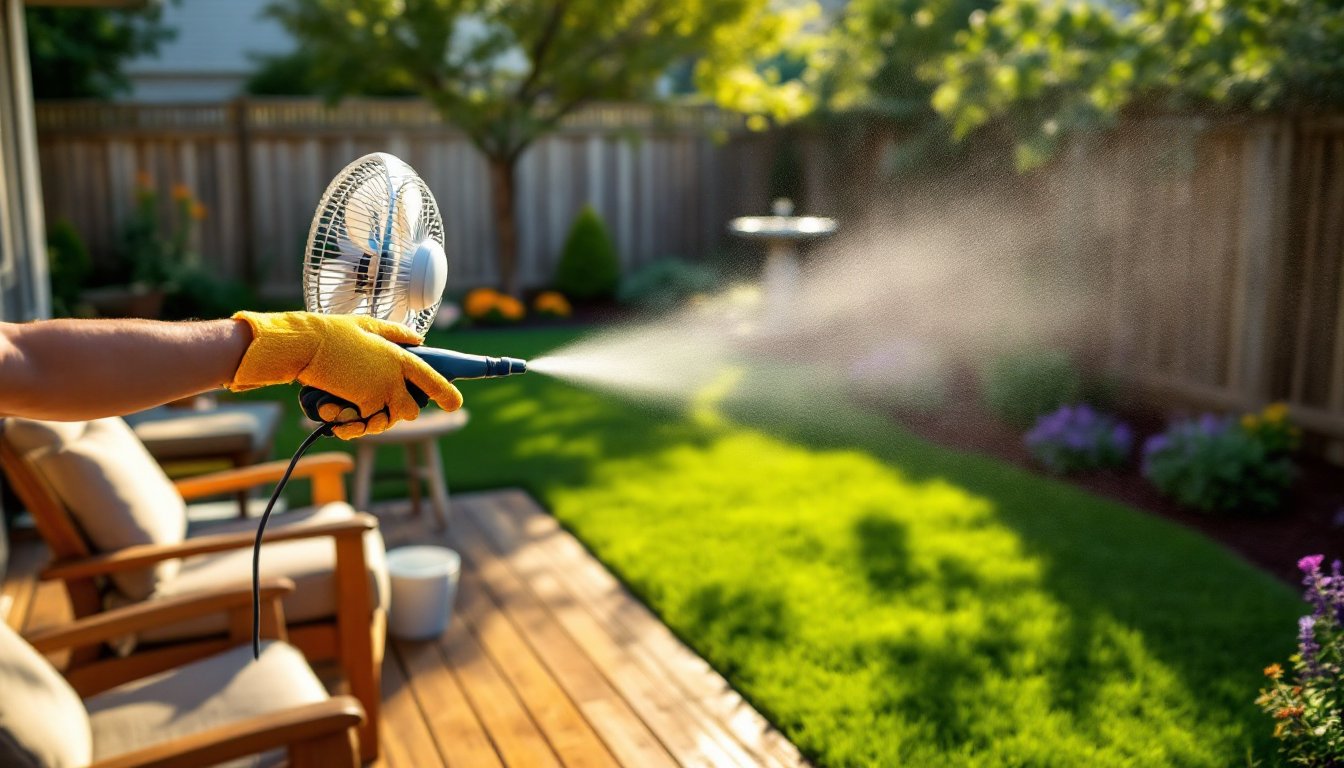
Fans: Mosquitoes are weak fliers. A 20-inch box fan or oscillating fan set on medium to high speed creates enough airflow to keep them out of seating areas. This is one of the most underrated and effective non-chemical methods for patios and decks. Position fans to blow across seating zones at ankle to torso height.
Garlic spray: Some homeowner maintenance guides mention garlic-based sprays as a mild deterrent. Commercial formulations or DIY versions (blended garlic cloves strained and diluted with water) can be sprayed on grass and shrubs. The odor, undetectable to humans after it dries, may repel mosquitoes for a few days. Results vary, and reapplication after rain is necessary.
Chemical and Physical Barrier Methods
When natural methods aren’t enough, targeted chemical treatments and barriers offer more aggressive control.
Larvicides: Products containing Bacillus thuringiensis israelensis (BTI), such as Mosquito Dunks or Mosquito Bits, kill larvae without harming fish, pets, or beneficial insects. Drop dunks into rain barrels, ponds, or any standing water that can’t be drained. Each dunk treats up to 100 square feet of surface water for 30 days. BTI is considered safe for organic gardening and is approved by the EPA.
Adulticides (perimeter sprays): Synthetic pyrethroids like permethrin or bifenthrin can be applied to shrubs, grass, and under decks where adult mosquitoes rest. Use a pump sprayer or hose-end applicator and treat shaded, humid areas, avoid spraying in full sun or on blooming flowers, as it can harm pollinators. Follow label instructions for mixing ratios (typically 0.5-1 oz per gallon of water) and reapply every 3-4 weeks or after heavy rain.
Safety note: Wear gloves, long sleeves, and eye protection when mixing and applying. Keep pets and children off treated areas until the spray dries completely (usually 2-4 hours). Avoid applying on windy days to prevent drift.
Mosquito traps: CO₂-based traps (like Mosquito Magnet or DynaTrap models) mimic human breath to lure and capture mosquitoes. These work best when placed 30-40 feet away from gathering areas, drawing insects away from patios. They’re expensive (often $300-$600) and require propane or electricity, but they can reduce populations over time when used consistently.
Screen enclosures and netting: For decks and patios, consider adding retractable screens or a permanent screen enclosure. This is a bigger investment, professional installation runs $3,000-$10,000 depending on size, but it creates a guaranteed mosquito-free zone. For temporary solutions, mosquito netting canopies over seating or dining areas cost $30-$150 and work well for occasional use.
Landscaping Techniques That Reduce Mosquito Populations
Strategic landscaping changes the habitat so mosquitoes can’t thrive, even without active treatments.
Trim and thin vegetation: Overgrown shrubs, ivy, and ground covers create humid microclimates where mosquitoes rest during the day. Prune shrubs to open up airflow, especially along foundations and fences. Aim for 6-12 inches of clearance between plantings and structures. Remove English ivy, pachysandra, or other dense ground covers in shaded areas near patios.
Mow regularly: Mosquitoes hide in tall grass. Keep lawn height at 2.5-3.5 inches depending on grass type, and mow weekly during growing season. Edge around flower beds and hardscaping to eliminate overgrown transitional zones.
Improve drainage: If your yard has low-lying areas that stay wet after rain, regrading or adding drainage is worth the effort. A slight slope of 1-2% away from structures encourages runoff. For persistent wet spots, install a dry well or perforated drain tile to redirect water underground.
Reduce mulch depth: Wet mulch in shaded beds holds moisture and provides mosquito habitat. Keep mulch depth at 2-3 inches maximum and pull it back a few inches from building foundations. Consider switching to hardwood or cedar mulch, which drains better than fine-textured pine bark.
Install bat houses or purple martin nests: Bats and purple martins consume large numbers of flying insects, including mosquitoes. A single bat can eat 1,000 mosquitoes per hour. Mount bat houses 12-15 feet high on a pole or building with southern exposure. Purple martin houses should be in open areas at least 40 feet from trees. Both take time to attract residents, but once established, they provide long-term natural control. Detailed installation and placement guides can help with proper setup.
Long-Term Prevention and Maintenance Tips
Mosquito control isn’t a one-time project, it requires routine upkeep, especially in humid climates or areas with seasonal rainfall.
Create a weekly inspection routine during mosquito season (typically April through October in most of the U.S.). Walk the property with a checklist: check gutters, empty saucers, inspect tarps, look for new water-holding debris. It takes 10 minutes and prevents population surges.
Coordinate with neighbors: Mosquitoes can travel 1-3 miles, so your efforts are more effective if adjacent properties also manage standing water and habitat. Share information or split the cost of a professional treatment for shared fence lines or drainage easements.
Monitor weather patterns: After heavy rain or tropical systems, breeding sites multiply overnight. Plan a post-storm inspection within 48 hours to dump new water sources before larvae develop.
Rotate treatments: If using chemical sprays, rotate between active ingredients every few applications to reduce resistance. Alternate between permethrin-based and natural pyrethrin products, or mix in BTI treatments to target larvae and adults simultaneously.
Keep records: Note what works in your yard, which areas are chronic problems, which treatments last longest, when populations peak. This makes future seasons easier and helps you fine-tune your approach.
For persistent infestations even though multiple DIY efforts, consider a professional mosquito control service for an initial knockdown treatment. Many offer seasonal plans with monthly or bi-weekly treatments. Expect to pay $75-$150 per application depending on yard size. Once populations are under control, you can often maintain with DIY methods. Resources like seasonal pest control calendars help homeowners time treatments for maximum impact.
Conclusion
Reclaiming your backyard from mosquitoes starts with eliminating standing water and continues with a combination of habitat management, natural deterrents, and targeted treatments. No single method works perfectly, but layering strategies, weekly water checks, smart landscaping, and occasional barrier sprays, creates an environment where mosquitoes struggle to breed and adults avoid lingering. Consistency matters more than intensity. A Sunday evening walk-through with a bucket to dump saucers and toys will do more than any single product.